

In a quiet corner of Kirinyaga County, on the slopes of Mount Kenya, a cooperative is redefining what it means to grow coffee for a living. Inoi Farmers Cooperative Society’s story, told through the eyes of its chairman and the farmers who deliver coffee cherries to its factories, captures something NKG East Africa believes to its core: farmers are not suppliers waiting to be managed, and not beneficiaries waiting to be helped. They are business partners, making investment decisions every day that shapes the future of coffee. It’s a distinction that matters. A supplier delivers a product and moves on. A beneficiary receives support and is grateful for it. A business partner does something different; they invest, they take risks, they expect a return, and when that return is strong, they reinvest and grow. That is exactly what is happening at Inoi Farmers Cooperative Society and across its 11 factories.
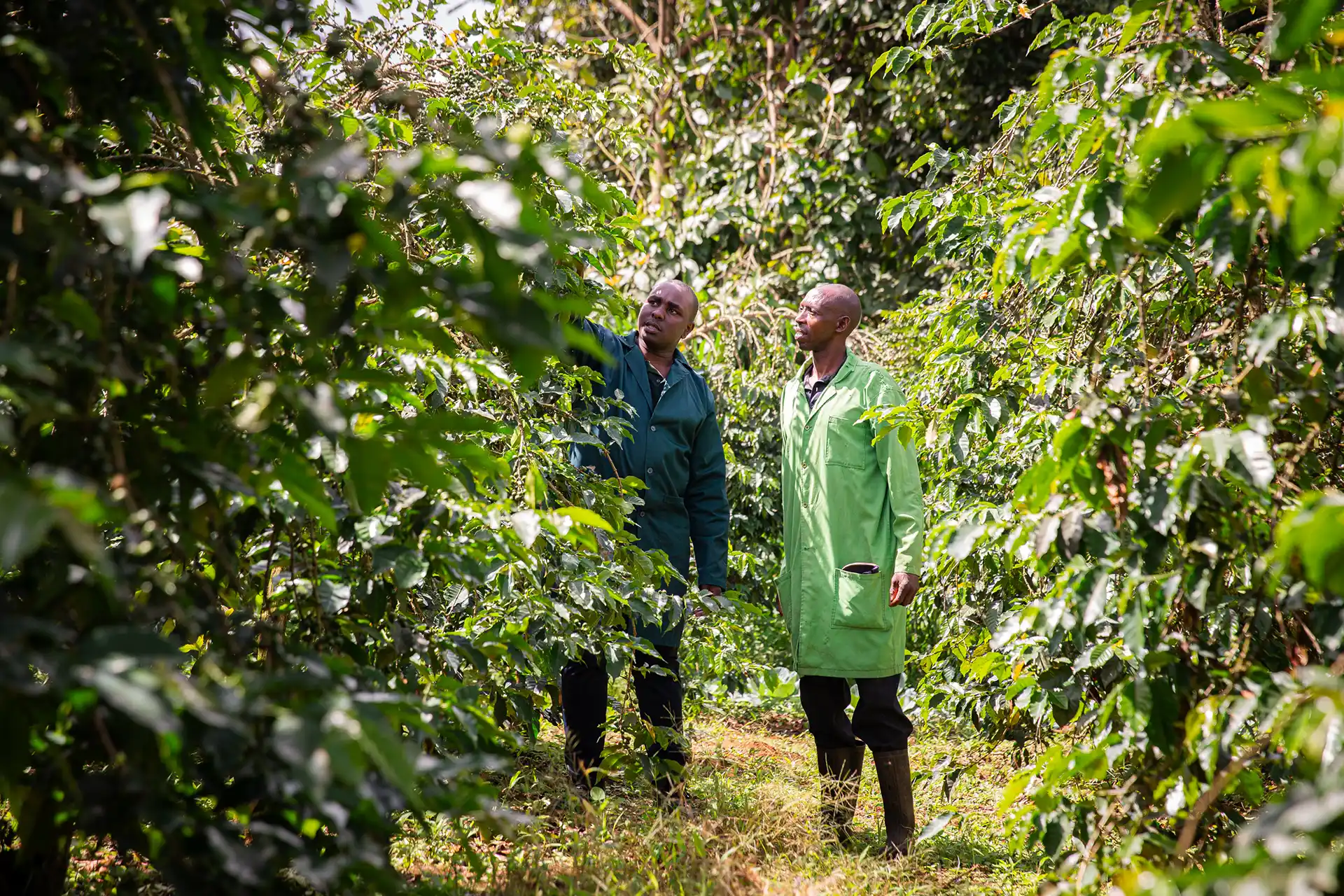
Jacob Wahome, Senior Project Assistant at NKG East Africa, visiting farmer James Murithi Kabui’s farm in Kerugoya and providing agronomy support.
Photos by: Alice Oldenburg
From 630,000 kilos to a million-seedling ambition
When the current board took office at Inoi Farmers Cooperative Society in 2021, member farmers were delivering around 630,000 kilograms of cherry a year, a sign, as chairman Felix Muriithi Mwai puts it, that farmers had quietly given up on the crop. Five years on, that figure stands at 2.2 million kilograms. The cooperative is targeting three million kilos next season and is building toward ten million within the decade. Felix, an agricultural economist by training, is candid about what changed: trust. “If you don’t trust your currency, the economy collapses,” he says. “Trust is the currency of Inoi Farmers, and that currency keeps getting stronger.” Open notice boards at every factory show farmers exactly what their coffee sold for, who bought it, and how proceeds were shared, the kind of transparency a business partner expects from any venture they’ve put capital into.
Daniel Magu, Specialty coffee trader at NKG East Africa, sees the same dynamic from the buyer’s side, and frames it as a matter of survival for the cooperative itself: “Leadership is key. Without proper leadership at a cooperative level, farmers don’t trust you, and they’ll deliver their cherry elsewhere, even further from home, to a cooperative they do trust.” In a sector where farmers can choose where to take their harvest, trust isn’t a soft value, it’s what keeps the cherry coming through the gate.
That trust has had a very practical effect: farmers are planting again. Inoi has distributed 200,000 subsidised seedlings to its roughly 5,900 active members, trained 100 Lead Farmers to mentor their peers, and built a nursery producing grafted, disease-resistant varieties. Each new seedling is expected to yield around six kilograms of cherry by its third year. Scaled across a million seedlings, that arithmetic could transform what farming households earn.
This is the partnership model in practice: NKG East Africa invests in agronomy, inputs, and market access; the cooperative invests in infrastructure, transparency and leadership; and farmers invest in their land, their labour, and their capital in a crop they now believe will pay them back. Daniel explains how that commitment plays out on the buyer’s side: “We don’t pre-finance the farmers directly, but we make sure we pay them good prices for their produce. We also guarantee the purchase of their produce. Once their coffee is ready, they don’t have to struggle looking for a market, we’re ready to take it.” That guarantee is what allows farmers to keep investing in their own farms with confidence that the harvest will sell.
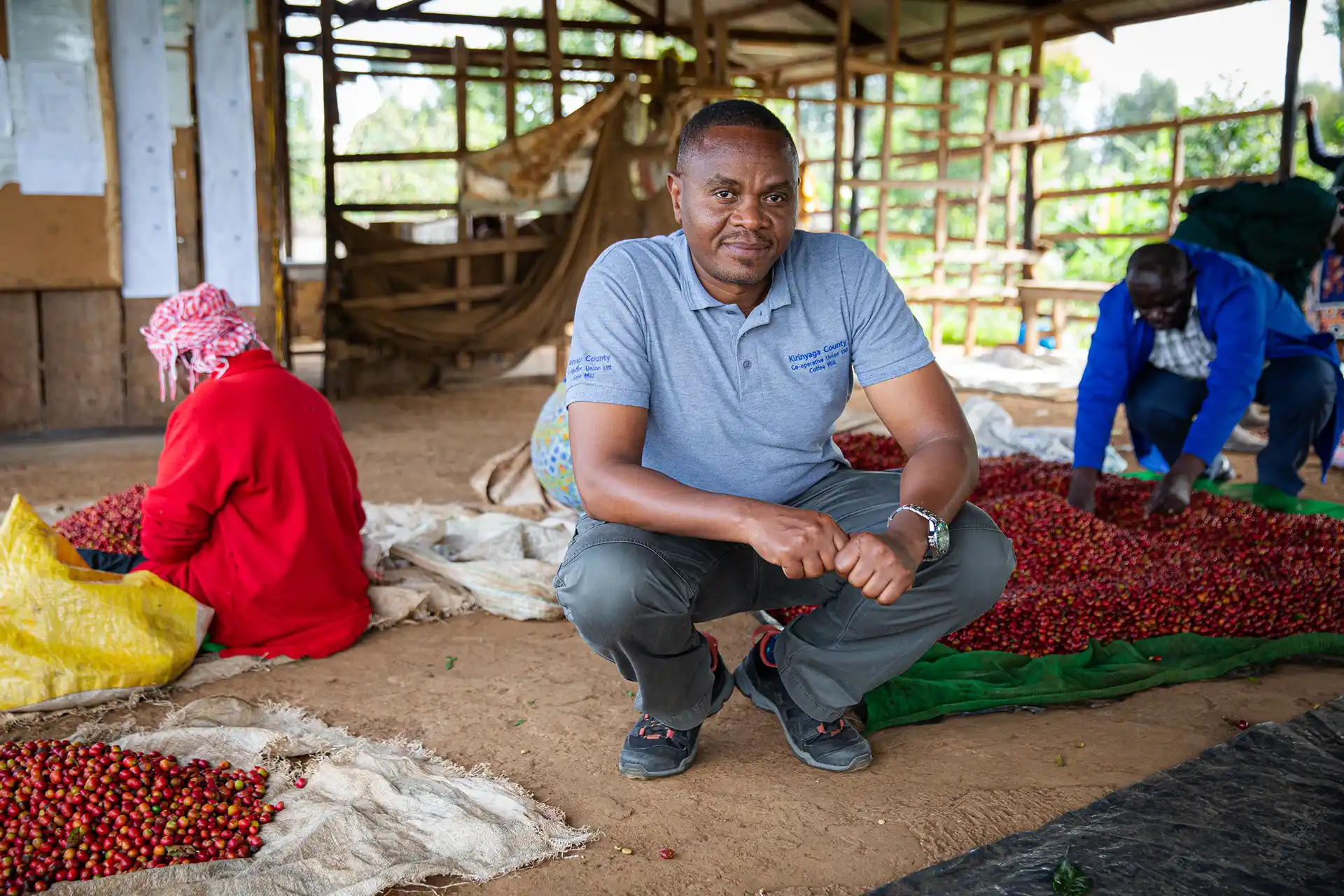
Chairman of Inoi Farmers Cooperative Society, Felix Muriithi Mwai, at one of the Inoi factories.
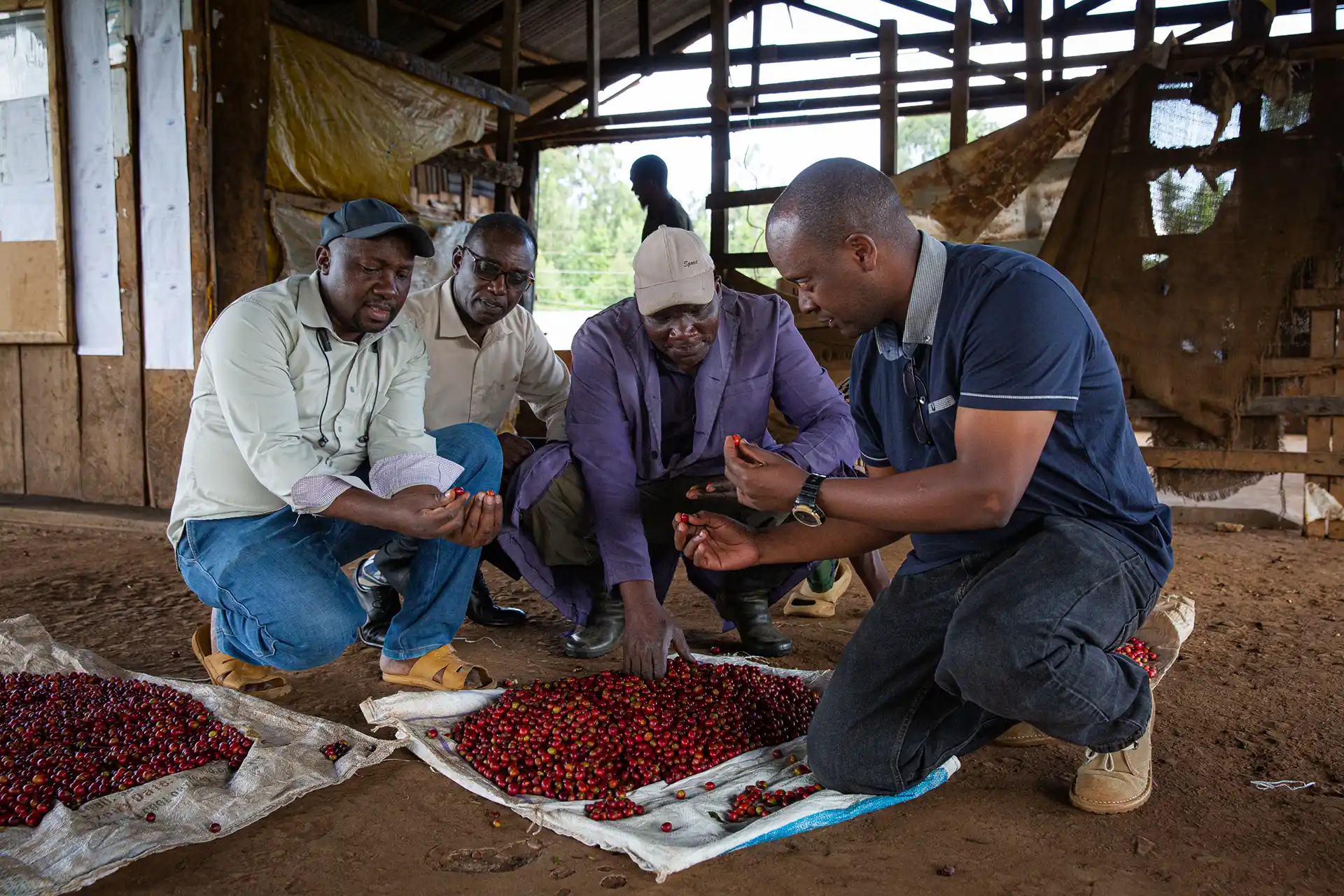
Daniel Magu, Specialty Trader at NKG East Africa, meeting farmers at Inoi Farmers Cooperative Society to discuss coffee quality.
Photos by: Alice Oldenburg
The view from the farm
For James Muriithi Kabui, 50, who has farmed coffee for 17 years, the change is measurable in kilos. “When I started, I used to produce around 200 to 700 kilos. Now I’m producing around 2,000 to 2,300 kilos,” he says. He credits regular training from the cooperative and visits from NKG East Africa’s agronomists, on canopy management, pruning, nutrition, and soil pH, with turning his farm around. “They are good partners,” he says simply. Coffee now pays his children’s school fees and funds other projects; farming, for him, has become a business with a plan, not just a crop.
Naftaly Ngari Kabwe, farming for two decades, describes the shift in similar terms: “Before, we were farming blindly, like driving in fog with nobody to guide us.” Since agronomists started visiting, his output per tree has more than doubled, from 2 kilograms to 5 or 6, with a clear path in sight to 10.
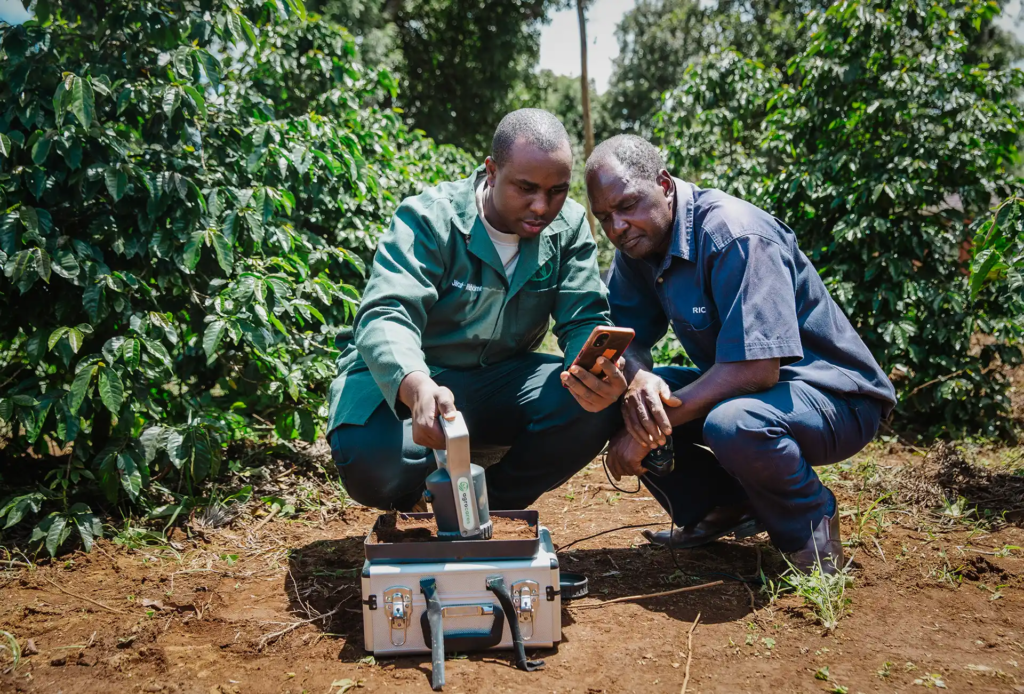
Jacob Wahome, Senior Project Assistant at NKG East Africa, taking soil samples on Naftaly Kabwe’s farm in Kerugoya
Photos by: Alice Oldenburg
Youth, women, and the next generation of business owners
Perhaps the most compelling voice belongs to James Munene, 25, who farms 250 coffee trees on land given to him by his father. He talks about coffee the way an entrepreneur talks about a portfolio: a mix of older Ruiru and newer SL varieties chosen for disease resistance and root strength, soil testing booked on demand, a WhatsApp group with fellow farmers for diagnosing problems in real time, and a notice board he checks himself to verify what his coffee actually fetched. “There’s much more transparency now when it comes to finances,” he says. “All we farmers really need is transparency.” His reasoning for staying in coffee is unambiguously financial. He compares a quarter-acre of maize, worth perhaps 20,000 Kenya Shillings ($154), with a quarter-acre of coffee, worth up to 200,000 Kenya Shillings ($1,547). “Coffee earns far more money than any other crop,” he says, and that, more than tradition or sentiment, is why he expects to keep expanding. His ambition is plainly stated: to own more land and build real wealth from coffee.
That ambition matters because of a demographic problem the sector cannot ignore. Jacob Wahome, NKG East Africa’s Senior Project Assistant, notes that the average farmer in the communities they work with is 60 to 70 years old. Without younger and female farmers stepping in, production will hit a natural ceiling. The encouraging sign is that women and young people are proving to be the fastest adopters of new practices, and the fastest at spreading it. Purity Nyawira Kiragu, three years into farming, has nearly doubled her harvest, from 86 kilograms to 136 kilos, after an agronomist taught her pruning, scouting, and pest control. Her farm has become an informal training ground: other women visit, watch, and copy what works, and word spreads through Kirinyaga’s merry-go-round networks faster than any classroom could teach it. “Women are proving more willing to adopt new practices, especially compared with older men who’ve farmed coffee the same way for decades,” Jacob observes. “And they have real influence over other women in their community, so once a new practice takes hold, it spreads quickly.” Naftaly agrees: “If we involve women, we’ll get more coffee, and more money will come into the household.”
Daniel sees a concrete reason behind that shift: who actually gets paid. “In the past, women worked in coffee, but it was their husbands who got paid,” he says. “Nowadays, it’s increasingly a 50/50 payment, which is motivating women to spend more time on the coffee farms.” When income lands directly in a woman’s hands rather than her husband’s, her stake in the business becomes real, not just her labour.
Felix sees the same generational pattern from the boardroom. Inoi’s own board reflects a younger generation in leadership, and he treats that visibly: “When you see the younger generation entering into coffee farming, that tells you the future of coffee is guaranteed to be great.”
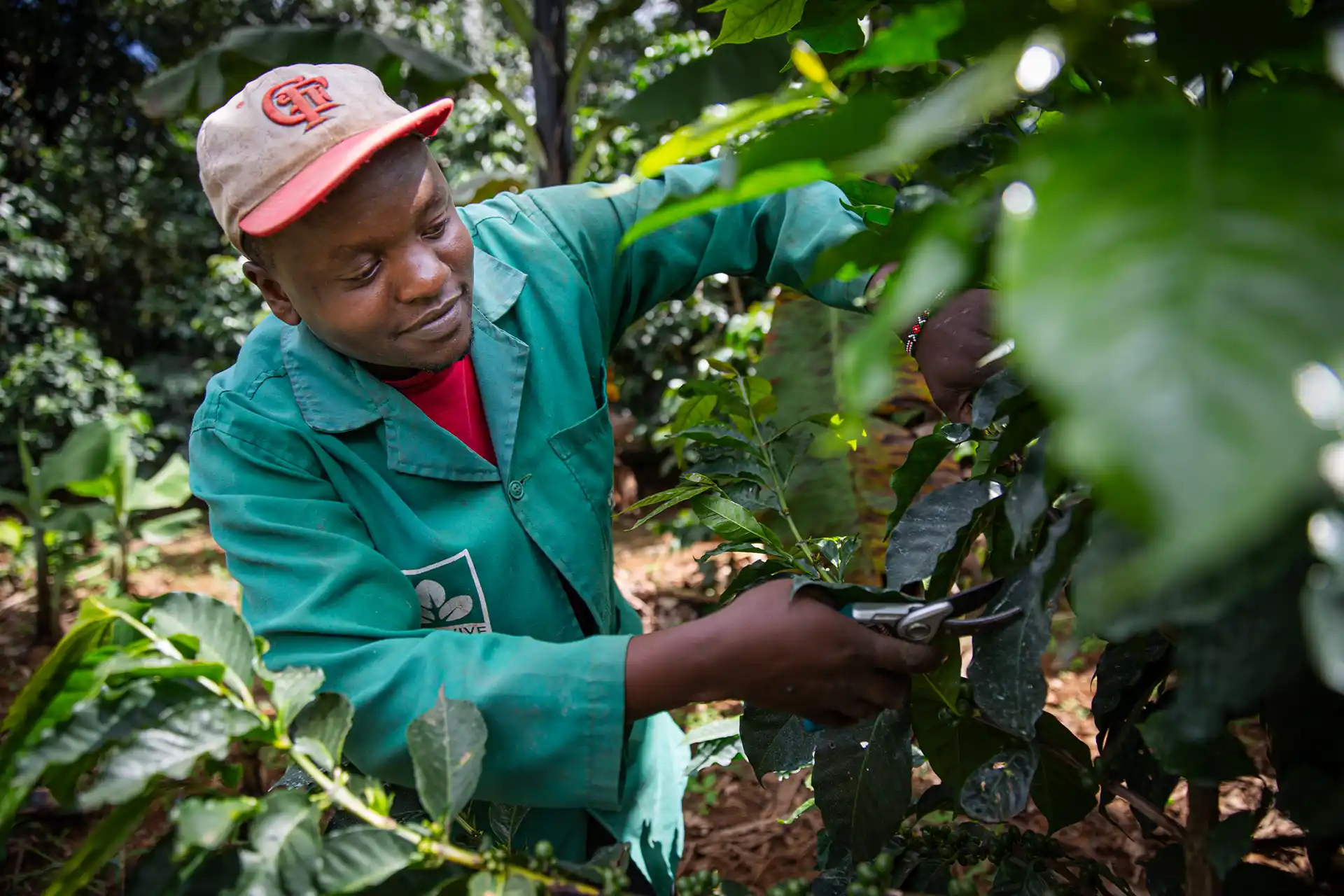
James Munene, 25, working on his coffee farm in Kerugoya, Kirinyaga County.
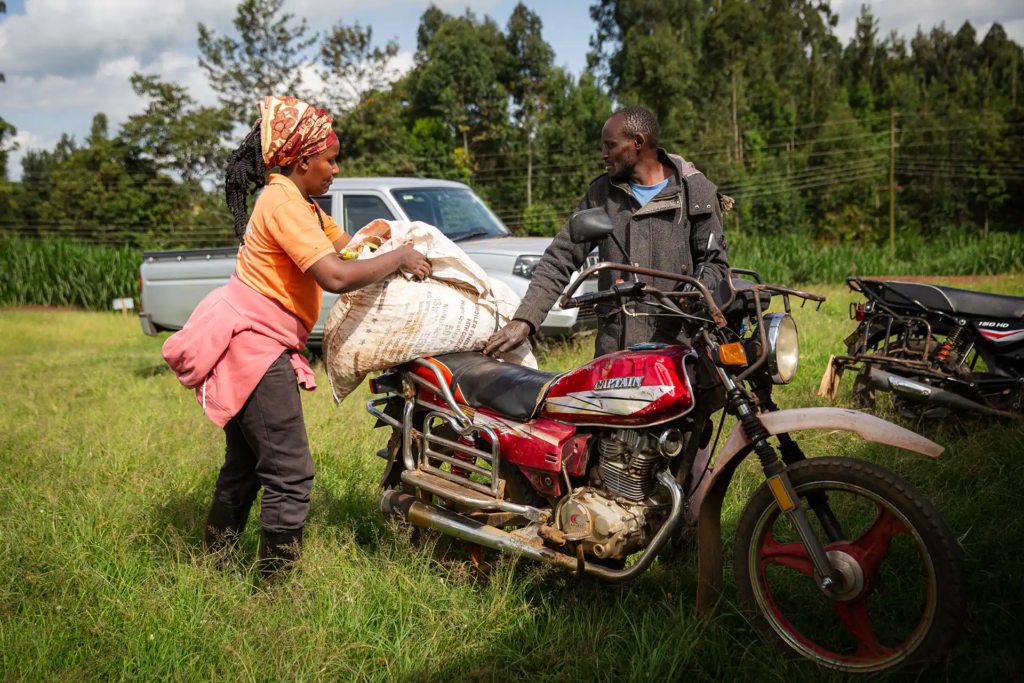
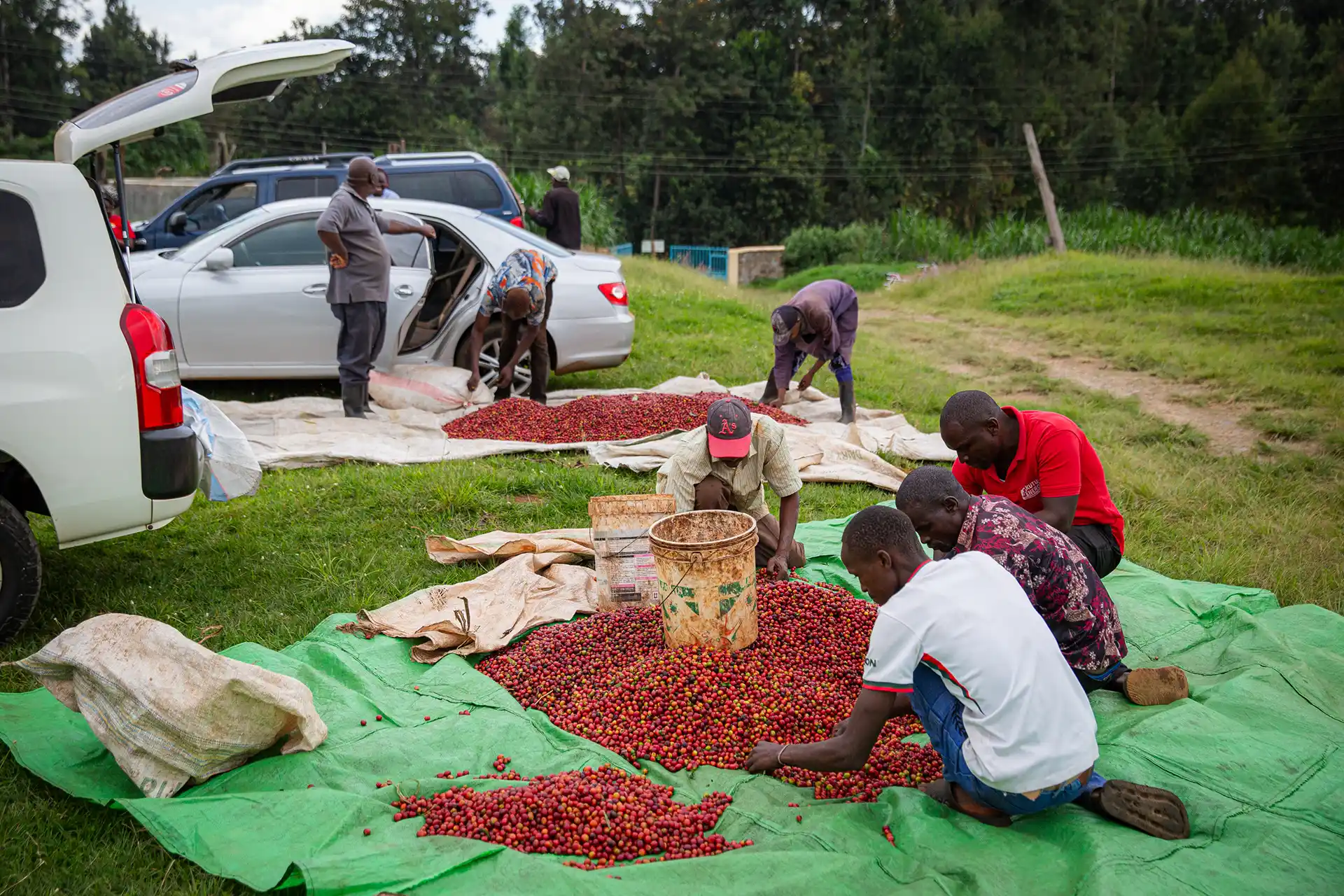
A woman farmer delivering freshly picked coffee cherries to the factory.
Photos by: Alice Oldenburg
Why this is a business story, not a development story
Strip away the agronomy and the cooperative structure, and what’s left is a simple business logic. Farmers will only keep growing coffee, and growing it well, if the crop is profitable once every cost is paid: inputs, labour, seedlings, transport to the factory, and processing costs. James Munene’s comparison of maize and coffee earnings makes the same point in practical terms: a crop only stays in the ground if its returns justify the effort. Felix’s transparency drive is, in essence, a question of margins: farmers need to see what was deducted and why, so they can trust that what’s left in their pocket is fair.
This is why NKG East Africa frames its work with farmers as partnership rather than one-way support. Agronomic training, soil testing, and direct market linkages through Ibero Kenya are not gestures of goodwill detached from commercial reality. They are investments designed to raise the profit a farmer takes home after costs. A farmer who nets more from a hectare of coffee than from maize will keep that hectare in coffee. A young farmer who can see a credible path to wealth, not just subsistence, will bring his energy and his land into the sector rather than out of it. A woman whose farm becomes the most productive in her village will recruit a dozen more without anyone asking her to. Felix sums up the stakes plainly: “We will be leaving our farmers better. They will be smiling. They will have something in their pocket. This community around us will be better off.” That is the test NKG East Africa applies to every intervention, not whether it looks good on paper, but whether it leaves more profit in a farmer’s pocket at the end of the season.
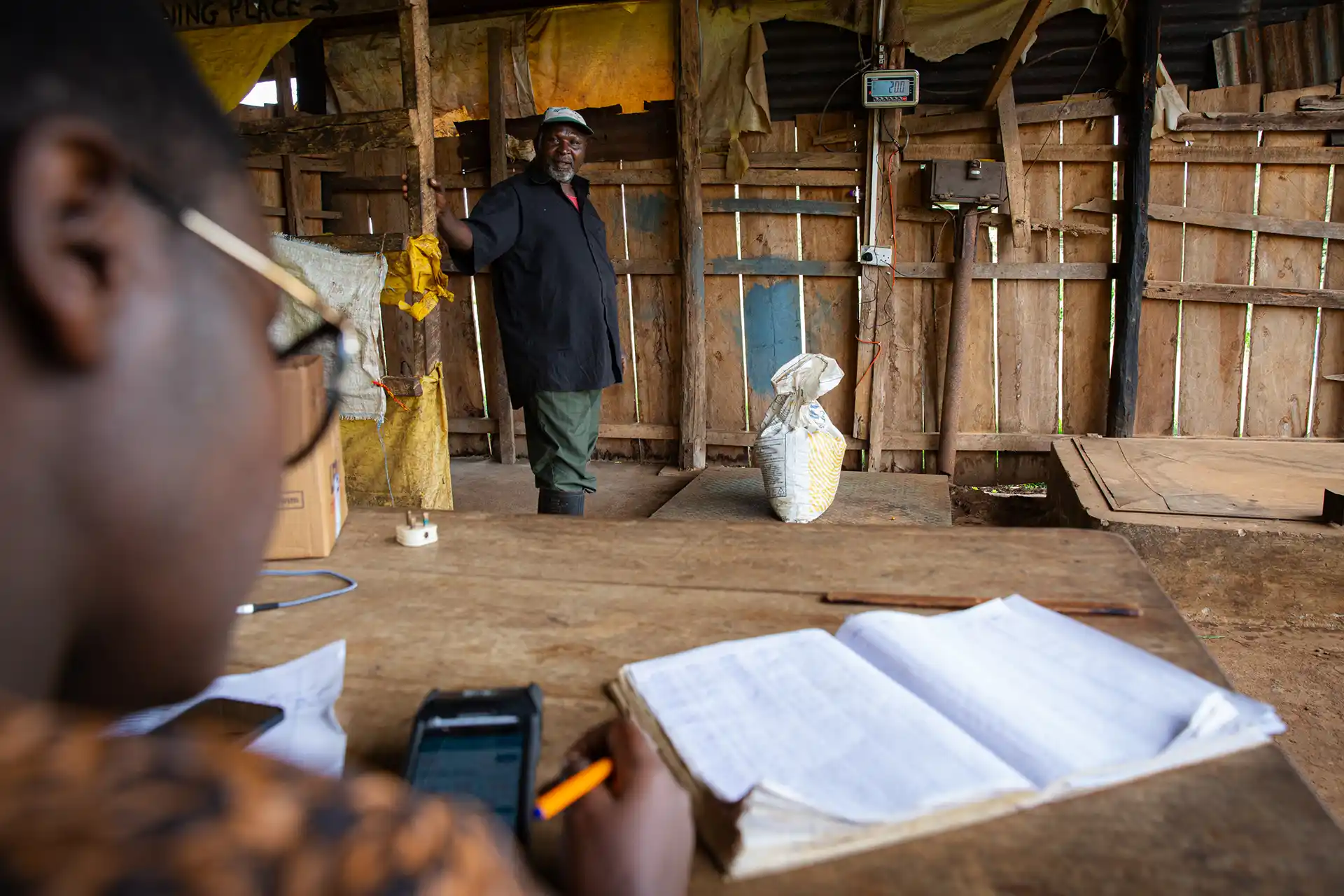
Coffee cherries being weighed and recorded at Inoi Farmers Cooperative Society.
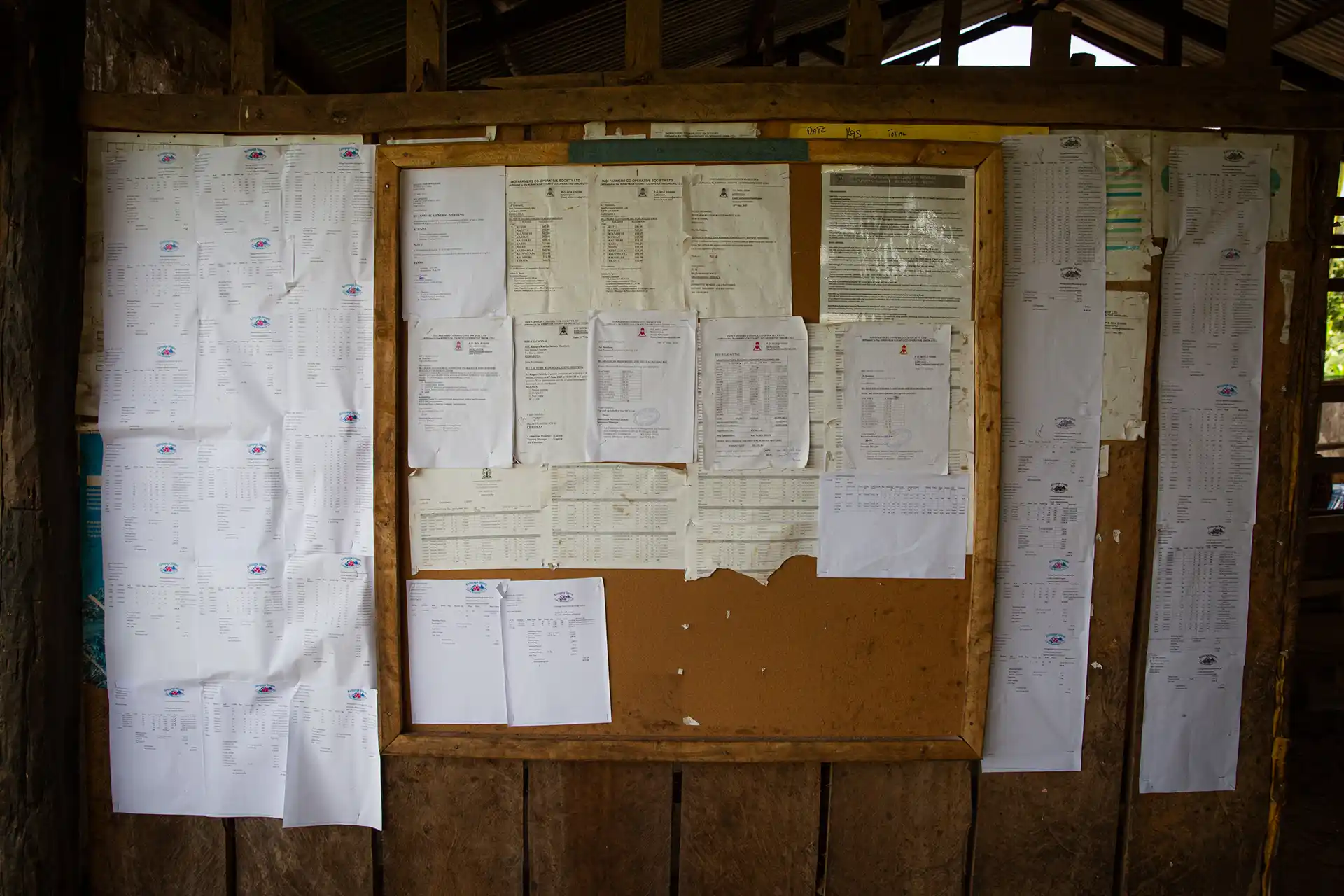
The notice board at Inoi Farmers Cooperative Society, displaying coffee prices and sales records.
Photos by: Alice Oldenburg
Shared success
What emerges from Inoi’s story is not a tale of aid flowing one way, but of three partners, a cooperative, a trading partner, and the farmer, all investing in each other because each one’s success depends on the others. When farmers like James, Naftaly, Purity, and the other James make more money from coffee than from any alternative, they keep planting, keep training, and keep bringing their children into the business.
Cooperatives grow stronger. Quality improves and commands better prices at origin. And buyers around the world can keep sourcing Inoi coffee with confidence, season after season. As Jacob Wahome puts it, “NKG believes in coffee today, tomorrow, and always, and that means building genuine trust with farmers.” At Inoi Farmers Cooperative Society, that trust, and the profit it is built on, is what is making the partnership work.
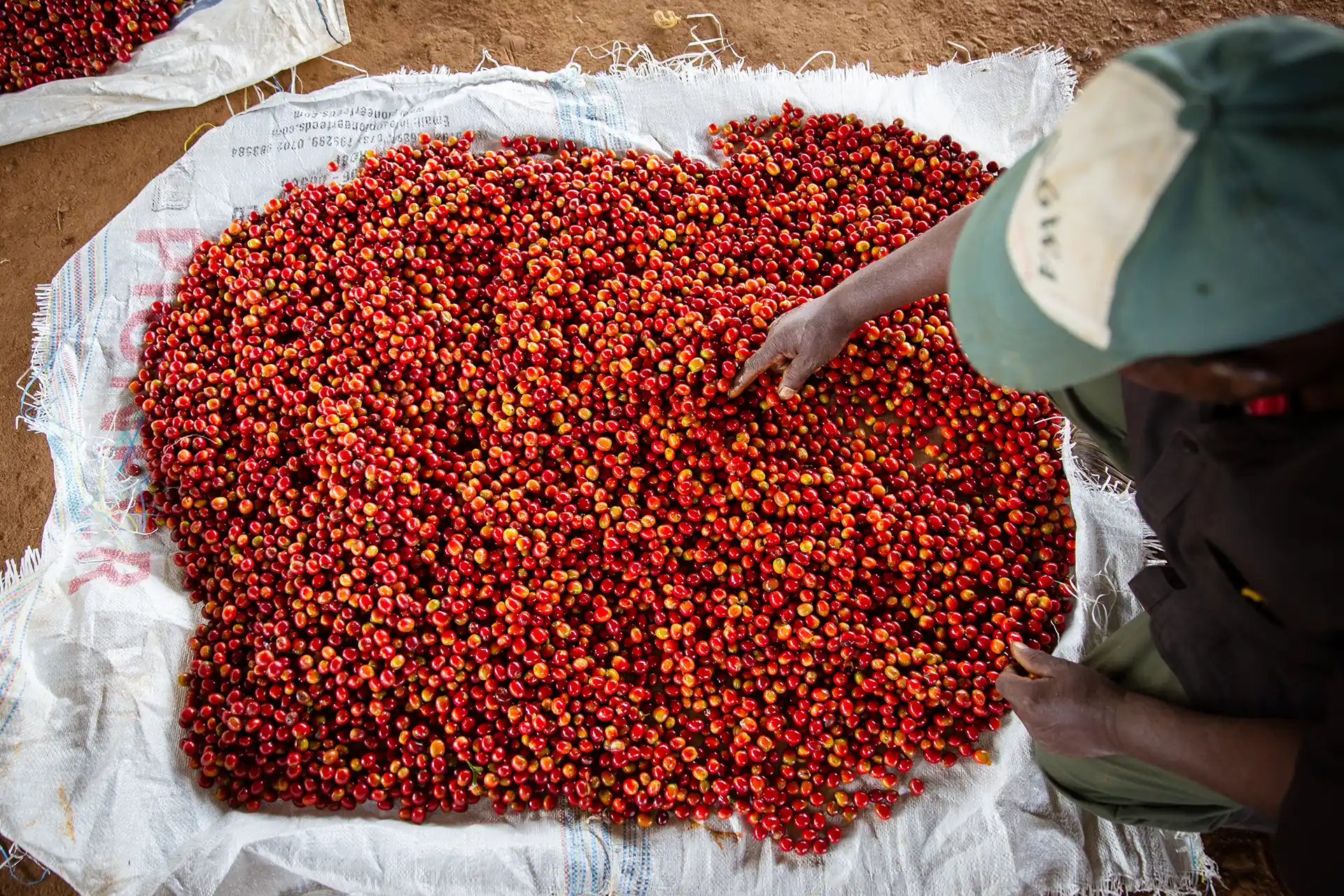
Coffee cherries being sorted for quality at Inoi Farmers Cooperative Society.
Photos by: Alice Oldenburg
