
Building a more sustainable coffee sector requires more than ambition, it requires collaboration, long-term commitment, and a willingness to adapt.
At NKG East Africa, we work closely with partners to address some of the most pressing challenges facing coffee today, from improving farmer livelihoods and strengthening climate resilience to supporting the next generation in coffee.
Together with Tchibo, a large German coffee roaster and consumer goods retailer, we are implementing a range of projects across Kenya and Tanzania that bring this approach to life on the ground.
We spoke with Krista Maruca, Regional Sustainability Manager at NKG East Africa, and Liz Mbau, Sustainability Advisor, from Tchibo to explore how this partnership is translating shared sustainability goals into valuable impact.
Can you give an overview of your joint projects in Kenya and Tanzania?
Krista Maruca (NKG East Africa):
We currently have four joint projects across the region, two in Tanzania and two in Kenya. In Tanzania, these are the Coffee Clubs and 100 Farmers projects, while in Kenya, we’re working on Brewing the Future – Coffee2Stay and Coffee2Stay in Nyeri County.
Some of these initiatives are relatively new, like Brewing the Future – Coffee2Stay, which launched in 2025 in partnership with Rainforest Alliance, while others, such as Coffee Clubs, have been running for several years and continue to evolve.
Liz Mbau (Tchibo):
Across both countries, the core focus areas are similar: improving farmer livelihoods and addressing climate-related challenges. But how we approach this differs based on the context.
In Kenya, farms are typically very small, so the focus is on balancing productivity with sustainability, ensuring farmers can increase yields while protecting their land for future generations.
In Tanzania, farms tend to be larger and there is stronger youth involvement, so the focus is on building strong foundations for sustainable coffee production and creating long-term opportunities for young people.
How do these projects differ across countries, and what influences their design?
Krista Maruca (NKG East Africa):
While the overarching goals are aligned, each project is intentionally designed for and with the communities it serves. We use participatory approaches to ensure that local priorities shape both the design and implementation.
For example, in Tanzania, the Coffee Clubs project has a strong youth empowerment focus. We identified the challenge of an ageing farming population, but also saw an opportunity: young people are interested in coffee if they can see it as a viable livelihood.
So we designed a programme that works with high school students and recent graduates, using school-based demonstration plots to show what productive, well-managed coffee farming can look like. Students then apply this learning on small plots at home, supported by ongoing field visits.
In contrast, in Kenya, particularly in central regions like Kirinyaga, the focus is different. Farmers are working with very small plots of land, so projects like Brewing the Future – Coffee2Stay focus on regenerative agriculture, income diversification, and building long-term resilience.
Liz Mbau (Tchibo):
We continuously adapt our approach based on what we learn. In Kenya, for example, we initially used a lead farmer model to share knowledge. However, given realities such as an ageing farmer population, newer projects are exploring more structured support through technical experts and extension officers, who can eventually be integrated into cooperatives.
As a result, project design is shaped not only by geography, but also by demographics, farm size, and local challenges.
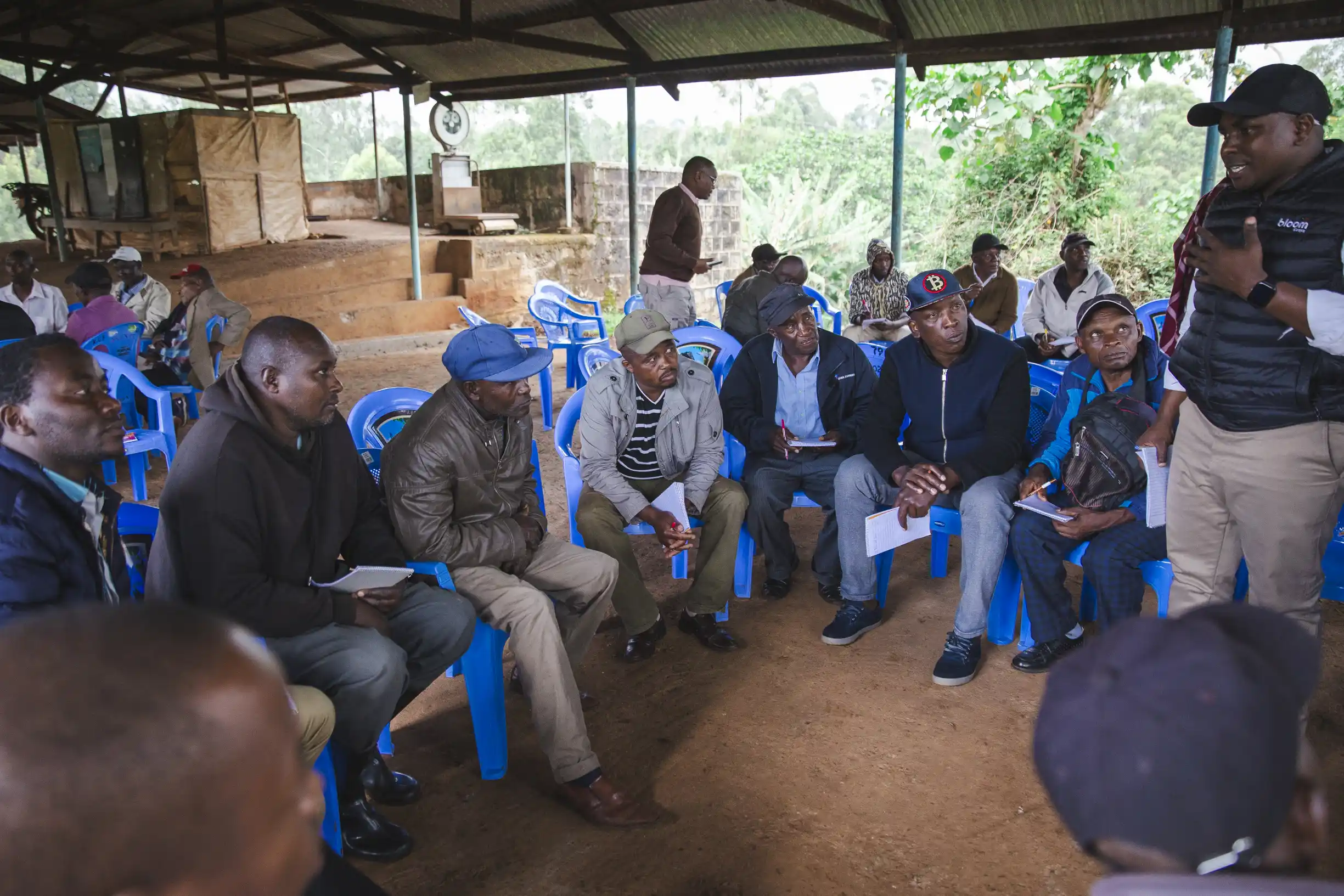
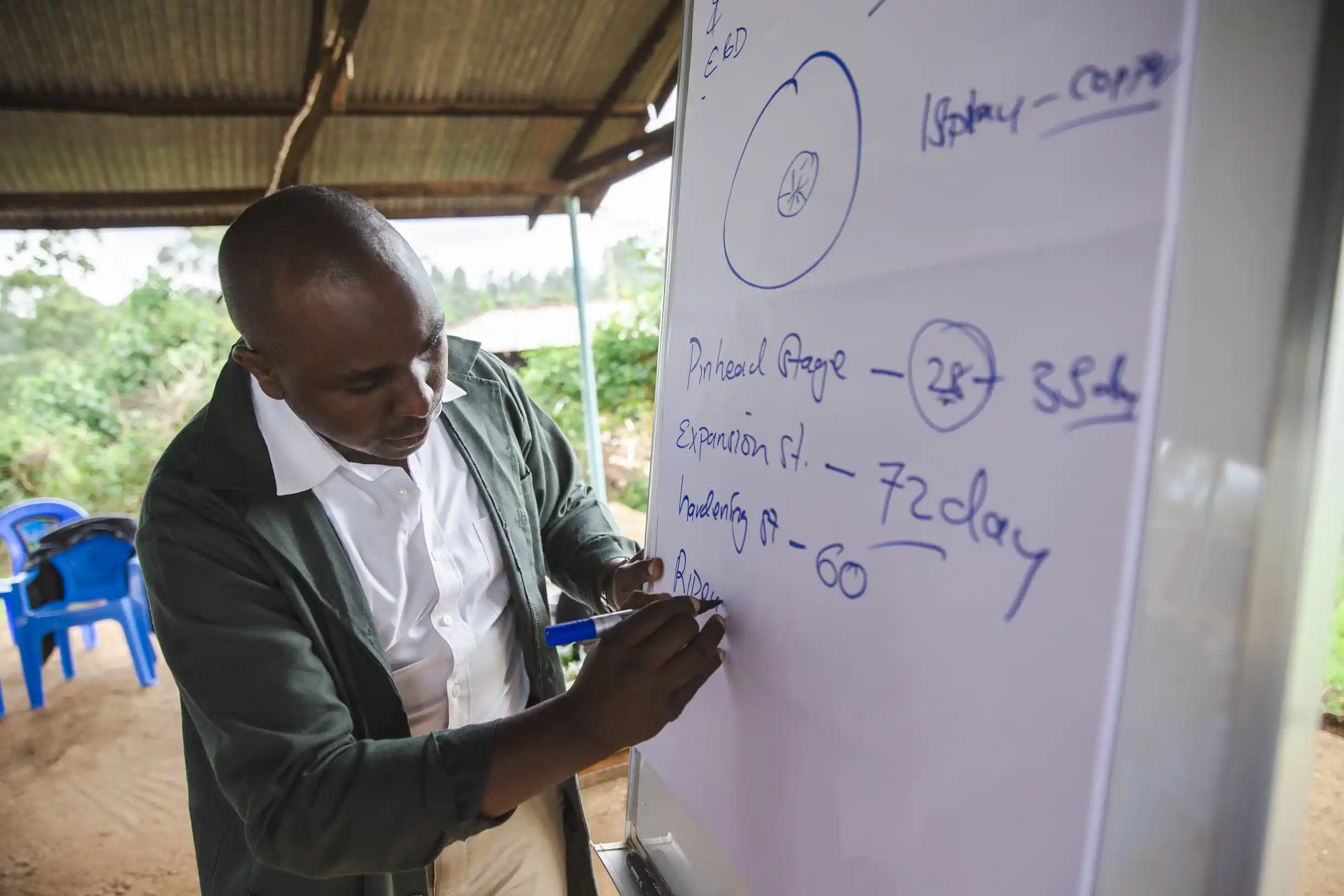
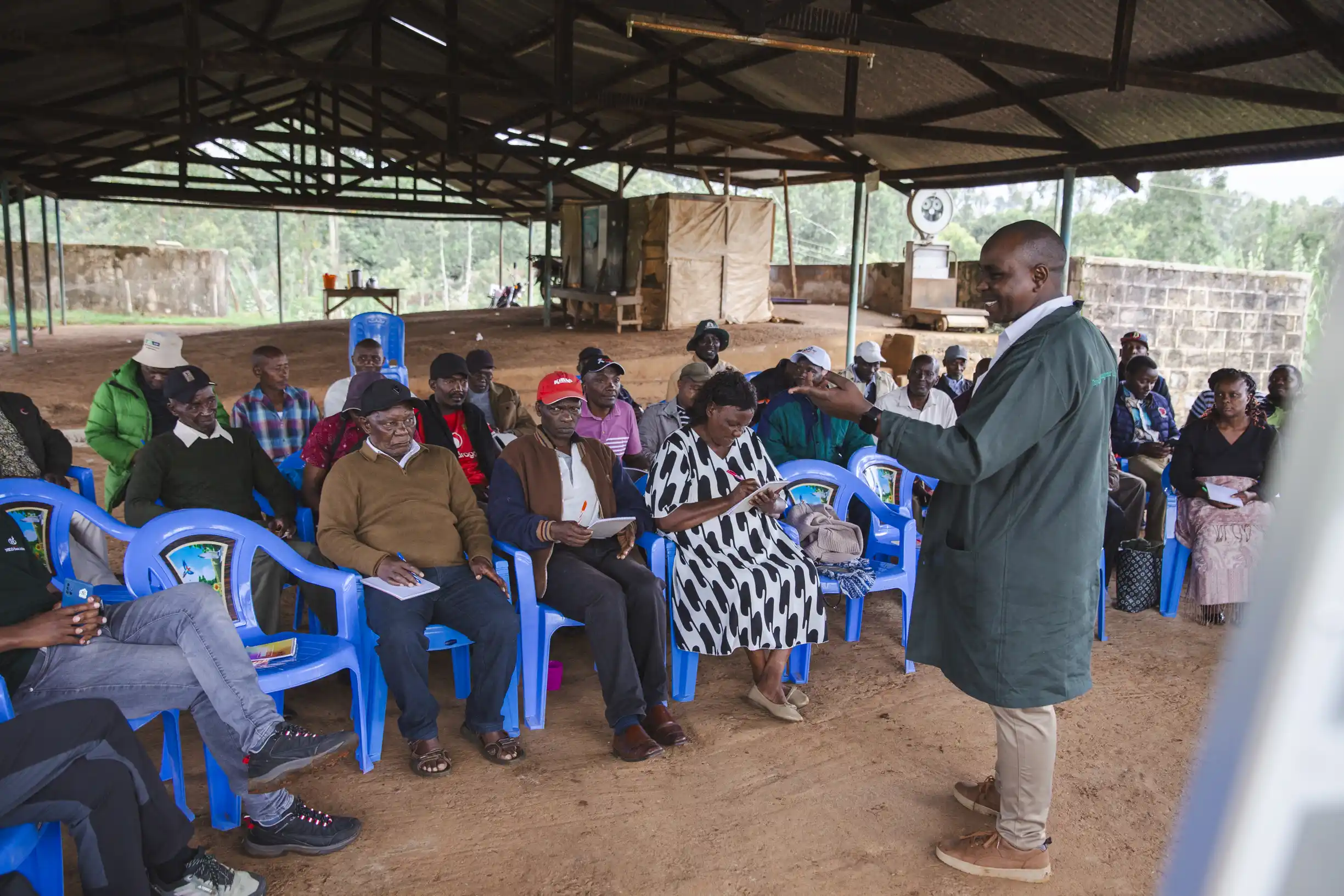
Jacob Wahome of NKG East Africa leads a training session with Lead Farmers on agronomy, communication, and sustainable coffee farming practices under the Brewing the Future – Coffee2Stay project, Inoi Cooperative, Kirinyaga County, March 2026
Photos by: Alice Oldenburg
Can you share examples of what you’re doing across these projects in practice?
Liz Mbau (Tchibo):
In Tanzania, the Coffee Clubs project is embedded directly into school curricula. Each week, students participate in practical, hands-on training sessions in coffee fields.
Field officers from NKG East Africa will guide them through: identifying pests and diseases, managing soil and plant health, applying techniques like irrigation and pruning.
The aim is not just theoretical learning, it’s about building real, practical skills that students can apply on their own family farms.
At the same time, the 100 Farmers project takes a “training of trainers” approach. Selected farmers receive intensive, ongoing support through monthly farm visits, and are then equipped to pass this knowledge on to others in their communities.
Krista Maruca (NKG East Africa):
Across all projects, training spans the entire coffee production cycle, from agronomy practices like canopy and nutrient management to harvesting, post-harvest handling, and quality control.
We also work closely with cooperatives to improve processing efficiency and coffee quality.
One example of how we’ve adapted the Coffee Clubs project is through the introduction of internships. Each year, a group of young participants joins our partner operations to gain exposure to the full value chain, from cooperatives and processing to dry milling and cupping labs.
This helps them see coffee not just as farming, but as a broader career pathway, and that’s been incredibly powerful.
What makes this partnership important, and how do your sustainability priorities align?
Liz Mbau (Tchibo):
For Tchibo, key priorities include improving livelihoods and supporting climate adaptation in coffee-producing regions. But we don’t have a direct operational presence in East Africa, so we rely heavily on partners like NKG East Africa to translate these priorities into action.
NKG brings not only local presence, but also valuable expertise in coffee production and strong relationships with farming communities.
Krista Maruca (NKG East Africa):
There is strong alignment in what we aim to achieve, but what truly distinguishes this partnership is how we work together.
Tchibo has been a valuable thought partner, they’re willing to engage in understanding root causes of challenges, like ageing farmers or declining productivity, rather than just focusing on outputs. They also bring an openness to innovation, which creates space for us to go beyond near-term implementation and focus on tangible, long-term impact.
What does this partnership enable that wouldn’t be possible independently?
Krista Maruca (NKG East Africa):
It allows us to pool resources and significantly increase our reach and impact. But beyond that, it creates space for innovation.
We’re able to test new approaches, take strategic risks, and continuously refine what we’re doing, something that would be much harder to do alone.
Liz Mbau (Tchibo):
From Tchibo’s perspective, NKG East Africa’s on-the-ground presence is essential. Their strong relationships with communities, cooperatives, and government stakeholders ensure continuity, even during periods of regulatory change. This level of connection and responsiveness would be difficult to replicate independently.
At the same time, Tchibo brings valuable market insight, understanding customer preferences, from flavour profiles to the types of stories that resonate, particularly for limited edition coffees.
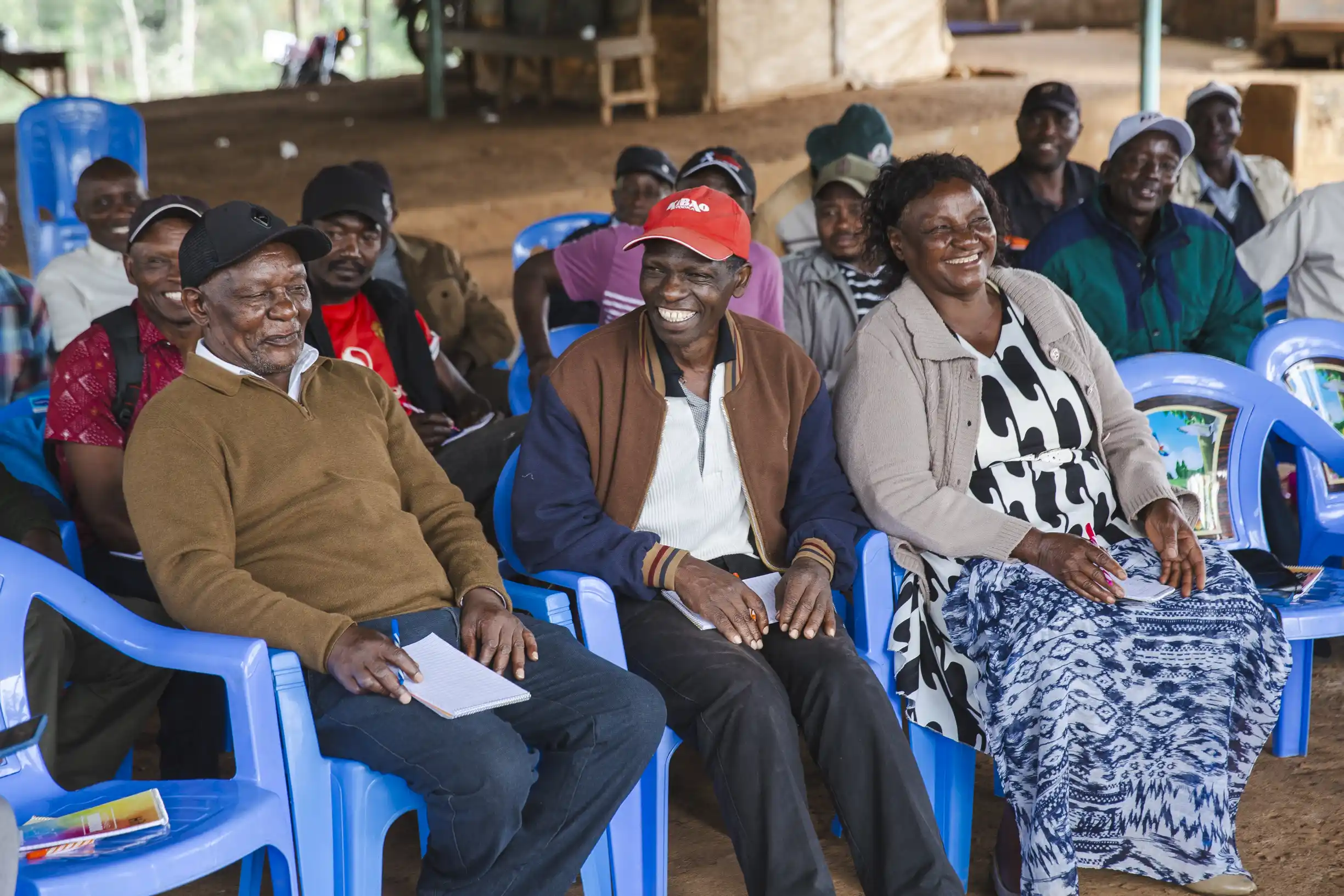
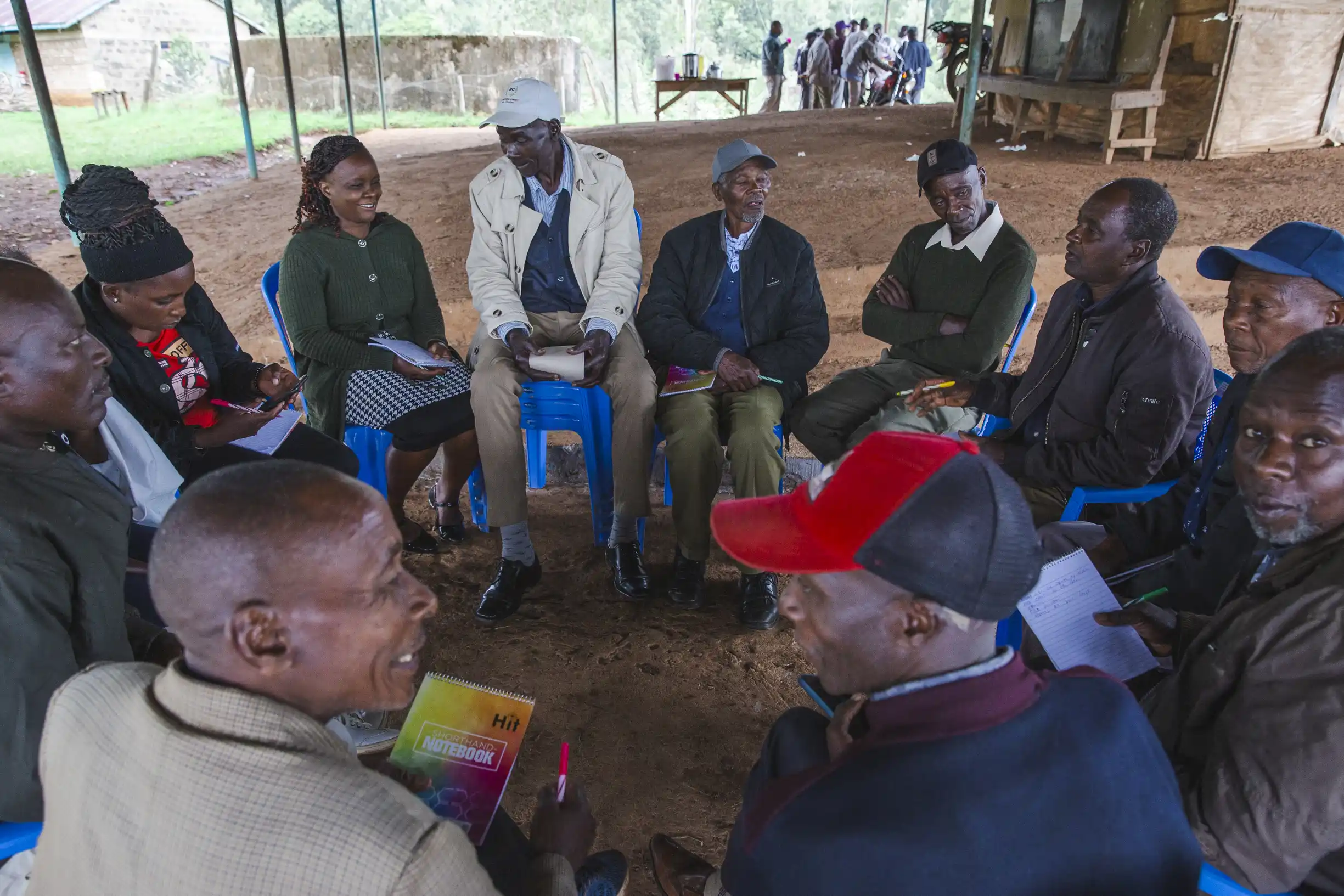
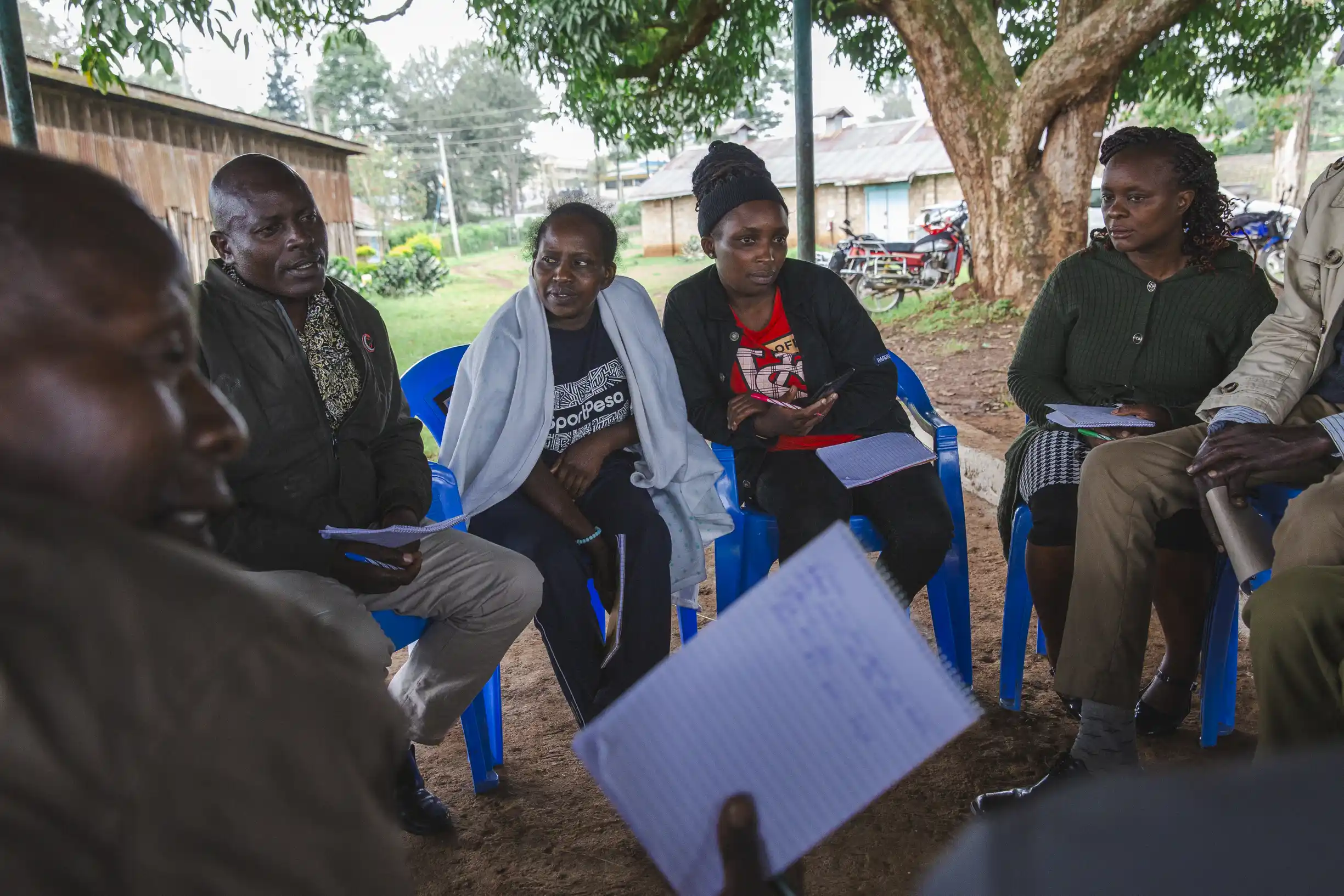
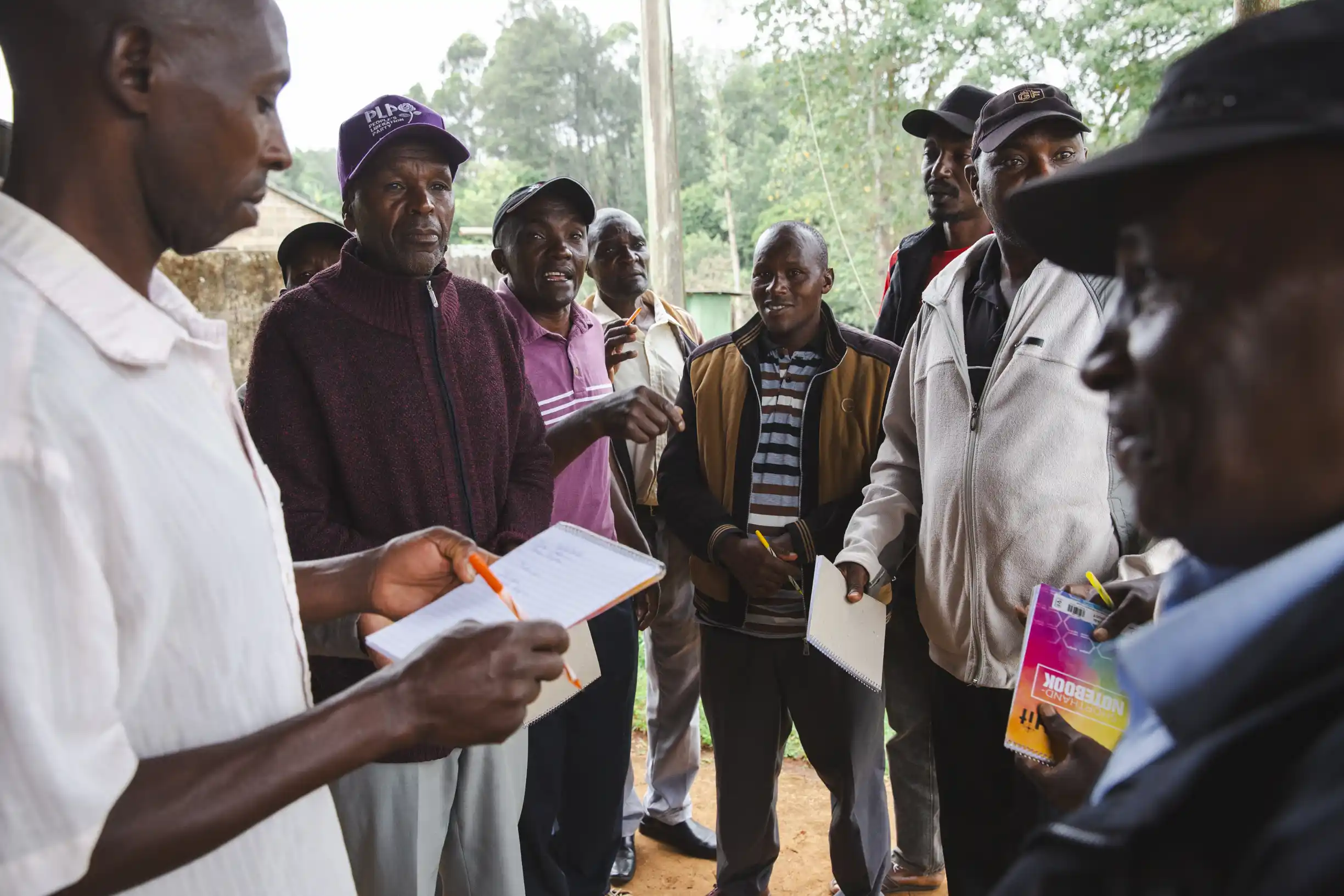
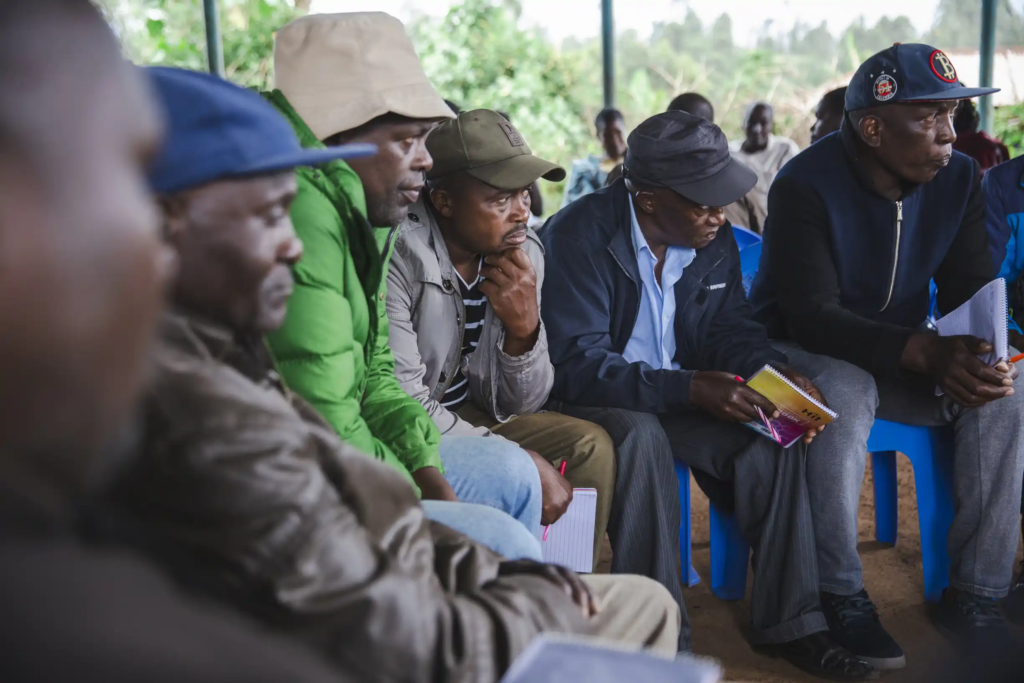
Lead farmers during a training session focused on agronomy, communication, and sustainable coffee farming practices under the Brewing the Future – Coffee2Stay project.
Photos by: Alice Oldenburg
How do you turn shared sustainability goals into practical projects on the ground?
Liz Mbau (Tchibo):
We start with a broad understanding of regional challenges, supported by data and external insights, and then narrow this down to specific communities and priorities.
From there, we work closely with NKG East Africa to identify where we can have the most impact.
Krista Maruca (NKG East Africa):
Once those priorities are defined, we move into detailed project design. This includes developing a “problem tree” to understand root causes and building a theory of change that outlines how specific activities will lead to desired outcomes.
Crucially, this process involves direct engagement with communities, ensuring that projects are grounded in local realities.
What role does NKG East Africa’s local presence and Farmer Services Unit play?
Krista Maruca (NKG East Africa):
Our local presence is fundamental. We’ve been operating in the region for decades and have long-standing relationships with farmers and cooperatives.
Our Farmer Services Unit, made up of experienced agronomists and field teams with expertise across both estate and smallholder farming systems, plays a key role in delivering training programmes, supporting farmers directly, monitoring progress, collecting data, and facilitating feedback loops with communities.
They are also recruited locally, which strengthens trust and ensures that projects are culturally and contextually relevant.
In addition, our experience in coffee milling in Tanzania and historically in Kenya enables us to support cooperatives in improving processing quality and operational efficiency, ultimately helping farmers capture greater value from their coffee.
Liz Mbau (Tchibo):
NKG East Africa is highly respected in the industry for its technical expertise, whether in agronomy, quality, or logistics. This credibility plays a big role in engaging farmers and ensuring the success of these programmes.
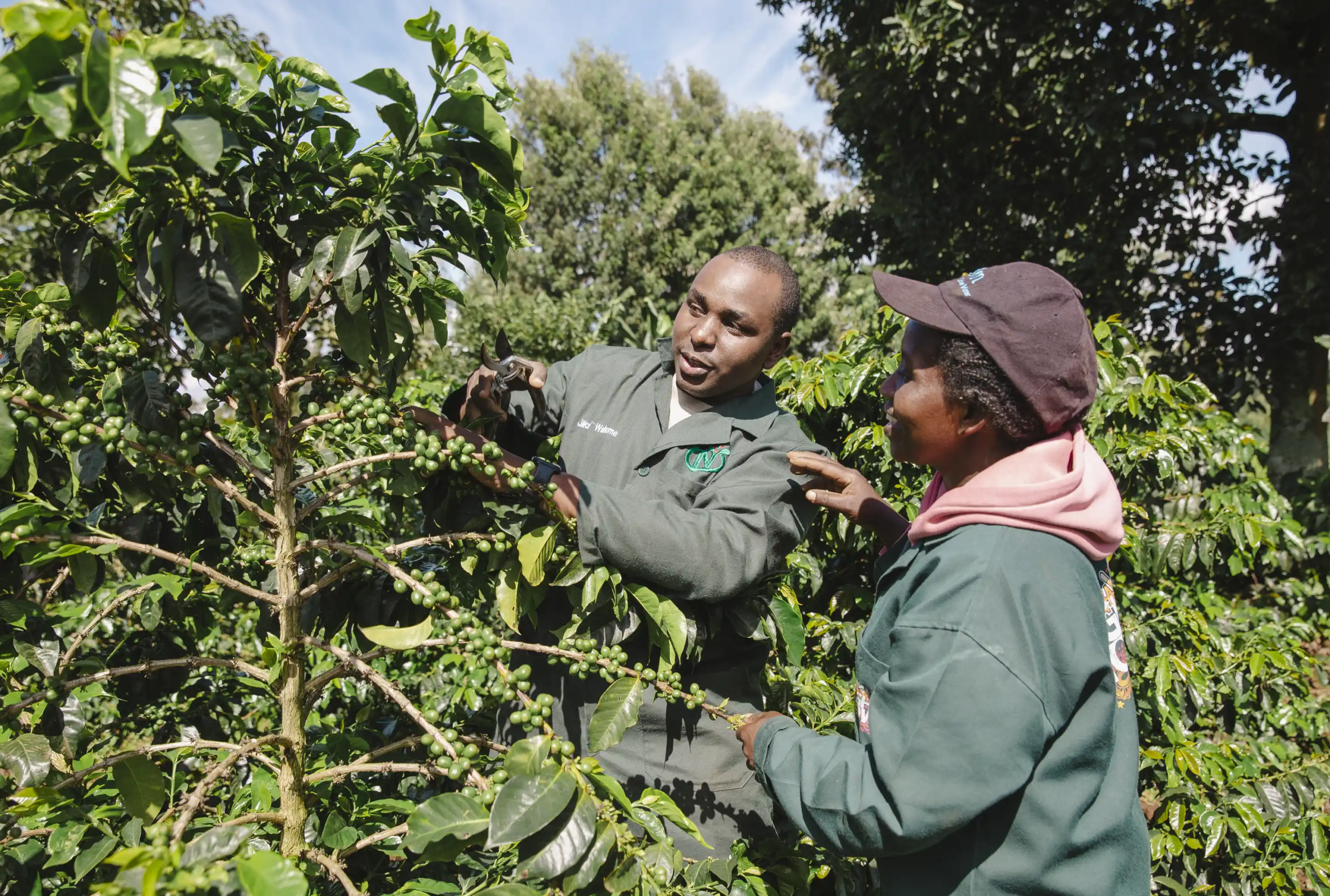
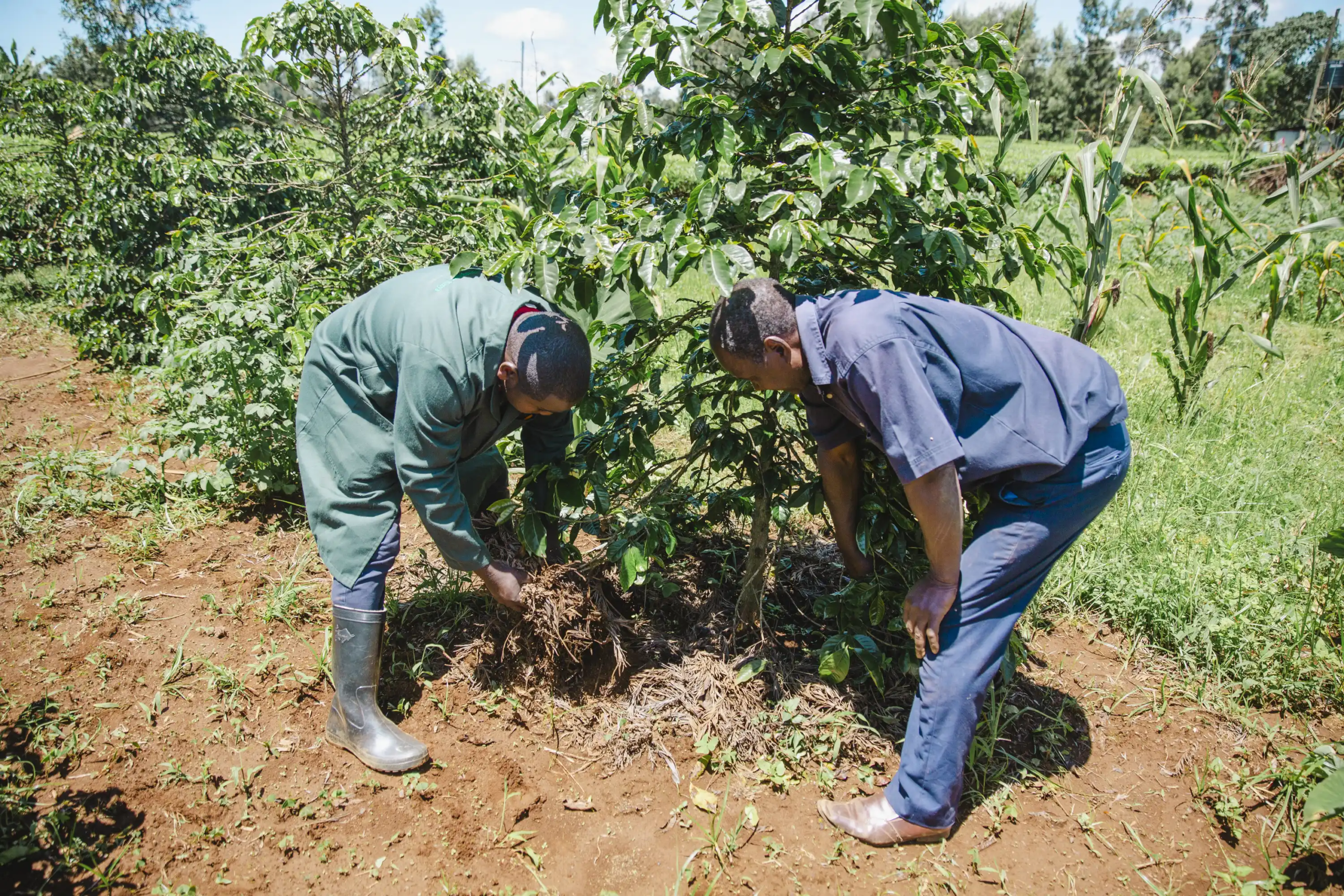
Jacob Wahome, Senior Project Assistant at Ibero Kenya, NKG East Africa (left photo), and Dennis Kariuki Kinyua (right photo), Agronomist at Inoi FCS in partnership with NKG East Africa, visit farmers in Inoi to provide training on agronomic practices including mulching and pruning.
Photos by: Alice Oldenburg
What progress have you seen so far across these projects?
Liz Mbau (Tchibo):
One of the most important progress we’ve seen, particularly in Tanzania, is social. Young people are choosing to stay in coffee, seeing it as a viable and rewarding livelihood.
That’s something we didn’t necessarily expect at this scale.
Krista Maruca (NKG East Africa):
We are also seeing strong quantitative results. In the Coffee Clubs project alone:
- Over 600 students are currently participating
- Around 550 recent graduates continue to be supported
- Just over half of participants are girls
- Productivity has more than doubled on participating farms
- Over 6,000 shade and fruit trees have been planted
These are early indicators, but they demonstrate clear progress.
How do you measure success? What matters most?
Krista Maruca (NKG East Africa):
We measure success through a combination of project-level indicators and broader impact assessments. This includes tracking farmer participation, adoption of practices, and comparing outcomes between project participants and non-participants.
We also monitor progress against defined indicators and use annual impact reviews to understand the overall reach and effectiveness of our projects.
Liz Mbau (Tchibo):
Success is measured through both early indicators and long-term impact. In the short term, we look at farmer engagement and adoption of practices, such as increased participation in activities like soil testing and training. Over time, what matters most is improved productivity, higher incomes, and stronger livelihoods, alongside the ability of farmers, especially young people, to see coffee as a viable future.
What are the main challenges in managing a multi-country partnership like this?
Krista Maruca (NKG East Africa):
One of the main challenges is time. Taking a participatory approach across multiple countries requires more time in communities and coordination across teams, which can be demanding to manage effectively.
Liz Mbau (Tchibo):
I would echo that, managing time across multiple countries and teams is a key challenge. As the partnership grows, ensuring efficient coordination becomes increasingly important.
What does this collaboration demonstrate about the role of partnerships in coffee sourcing today?
Krista Maruca (NKG East Africa):
The challenges facing coffee are complex, too complex for any one organisation to solve alone.
This partnership shows what’s possible when there’s shared ownership, long-term commitment, and a willingness to invest, learn, and adapt together to drive more sustainable impact.
Liz Mbau (Tchibo):
It also reflects the future of coffee sourcing: more collaboration, more integration, and stronger connections across the value chain.
Final Thought
At NKG East Africa, this partnership demonstrates that valuable impact doesn’t come from isolated efforts, but from working together, aligning goals, and staying grounded in the realities of the communities at the heart of coffee production.
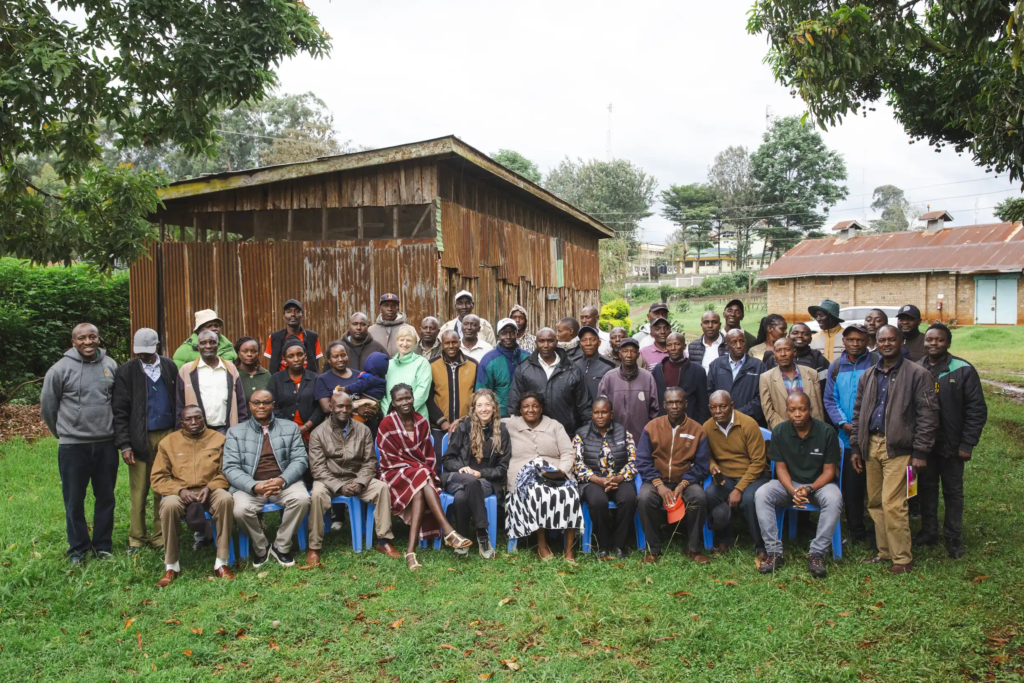
Group photo from a Lead Farmer training on agronomy, communication, and sustainable coffee farming practices under the Brewing the Future – Coffee2Stay project by NKG East Africa in partnership with Tchibo and Rainforest Alliance.
Photos by: Alice Oldenburg
