
Every cup of coffee begins long before it reaches the roaster. Behind it are people making decisions, building relationships, and safeguarding quality at every step. This is the work of Daniel Magu, a specialty coffee trader working at origin and connecting coffee from East Africa to the world.
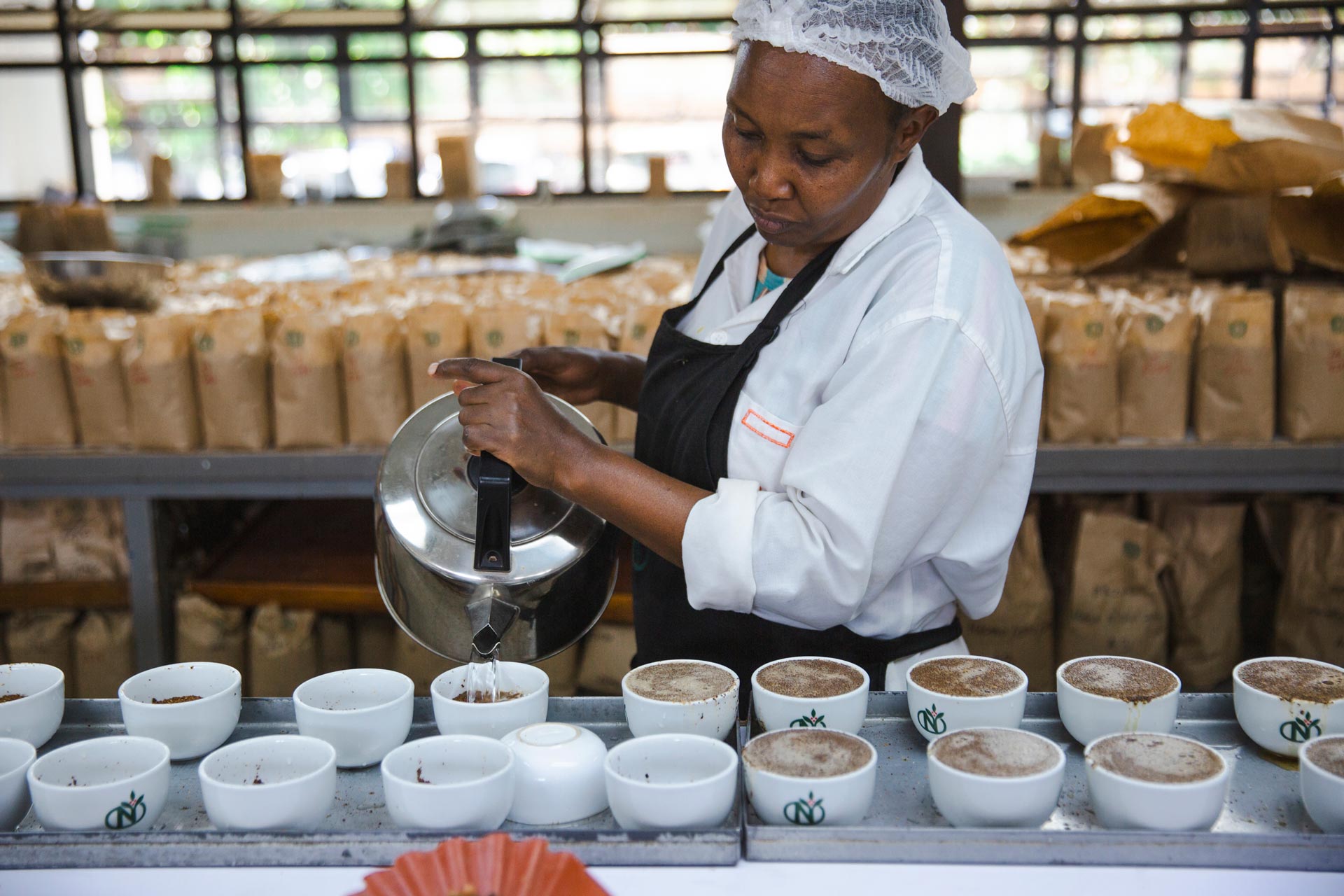
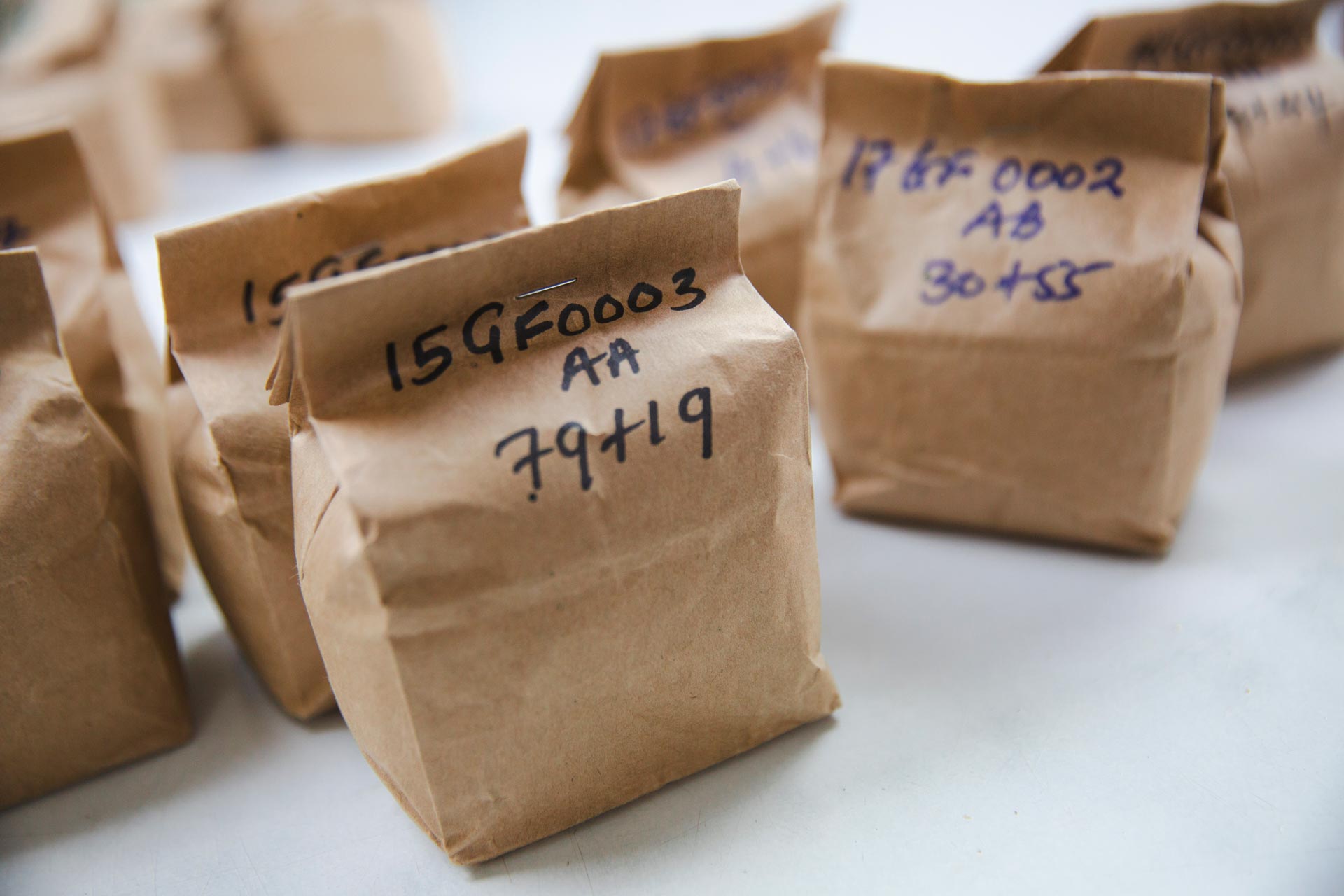
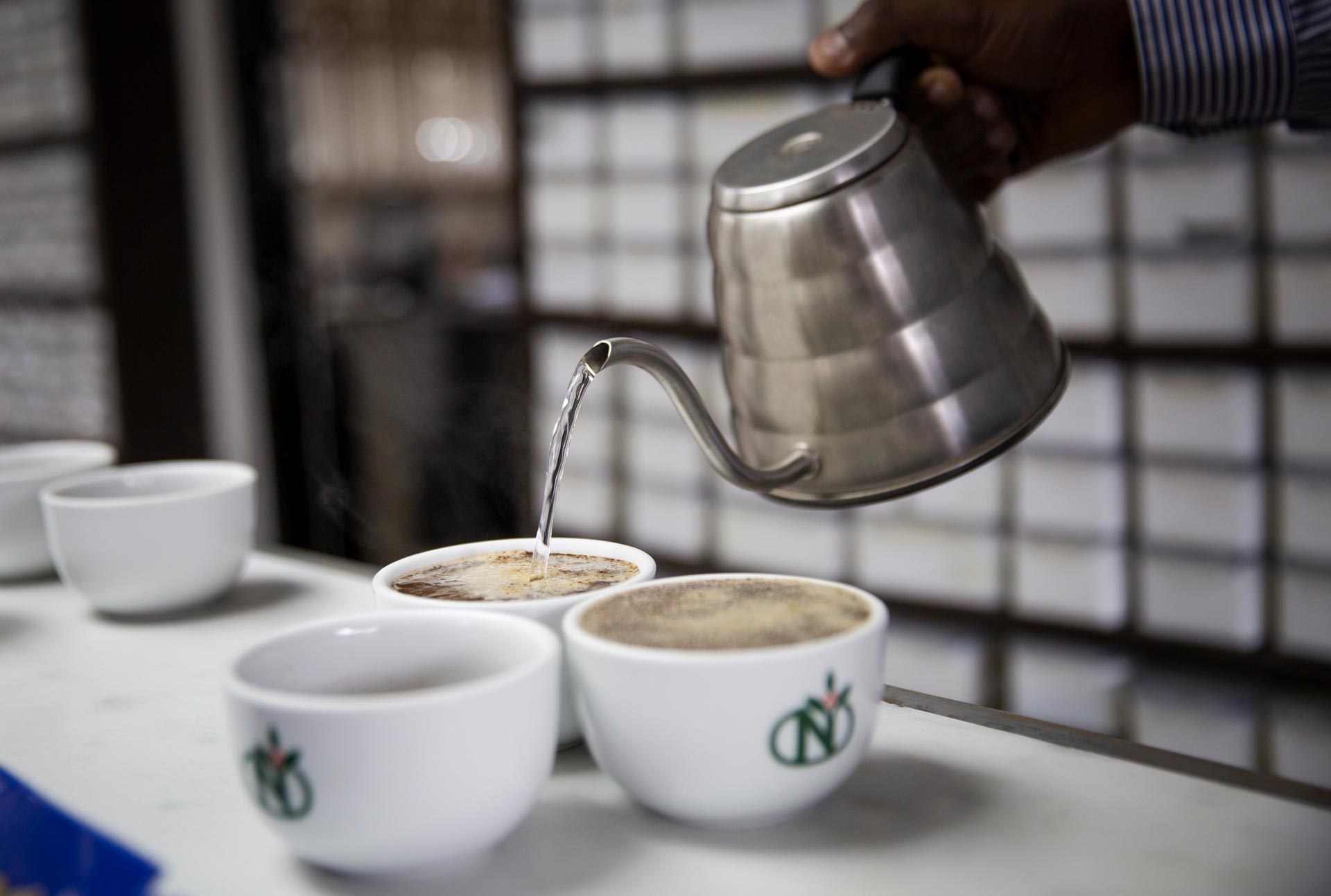
Scenes from the cupping room, where coffees are evaluated and selected before reaching the market.
Photos by: Alice Oldenburg
The cupping room is already filled with the aroma of freshly ground coffee.
Rows of cups line the table. A kettle whistles in the background. Notebooks are open, spoons ready.
For Daniel Magu, a specialty coffee trader at NKG East Africa, the day has already begun.
His first task is preparing a cupping preselection for visiting clients, coffees sourced from across Kenya, Uganda, and Tanzania. Each cup represents a farm, a cooperative, a harvest season, and months of work by producers across the region. But before buyers taste the coffee, Daniel has already done the groundwork.
His role is to connect producers in East Africa with specialty buyers around the world while safeguarding quality, traceability, sustainability, and commercial viability. It is a role that sits at the intersection of agronomy, logistics, quality control, and global trade. And during coffee season, it rarely slows down.
“It’s a demanding position,” Daniel says. “For about ten months of the year, the work is at its peak.”
Connecting Producers and Markets
A specialty coffee trader works in the middle of the supply chain, where relationships matter just as much as quality.
Daniel spends much of his time building trust with farmers, cooperatives, estates, importers, and roasters. His goal is to ensure that coffee moves smoothly from origin to international markets while everyone in the supply chain benefits from the process.
Across East Africa, most coffee is grown by smallholder farmers managing small plots of land. Farmers deliver their coffee cherries to cooperative-managed wet mills, where the coffee is processed and prepared for sale.
NKG East Africa works closely with these cooperatives and producers to maintain quality and strengthen supply chains. The company sources coffee directly from these networks while supporting more resilient and sustainable coffee systems across the region.
For Daniel, maintaining strong relationships with these partners is essential. “When you have a strong relationship with cooperatives and producers, you can provide actionable feedback,” he explains. “That helps reduce quality risk and improve the coffee over time.”
Sometimes that feedback is immediate, spotting defects during cupping and informing a factory manager so adjustments can be made for the next processing batch. Other times it comes through conversations in the field. “Conversations with farmers aren’t casual discussions,” Daniel says. “They are critical data points that shape sourcing strategies and quality expectations.”
One conversation in particular stayed with him. During a visit to a farm, Daniel asked a farmer what the best price would be for his coffee. The farmer paused, unsure how to answer. Daniel explained that the right price is any price that covers the cost of production and the time invested in growing the crop. For him, the moment reflected a broader reality of coffee farming, where producers constantly balance effort, risk, and market value.
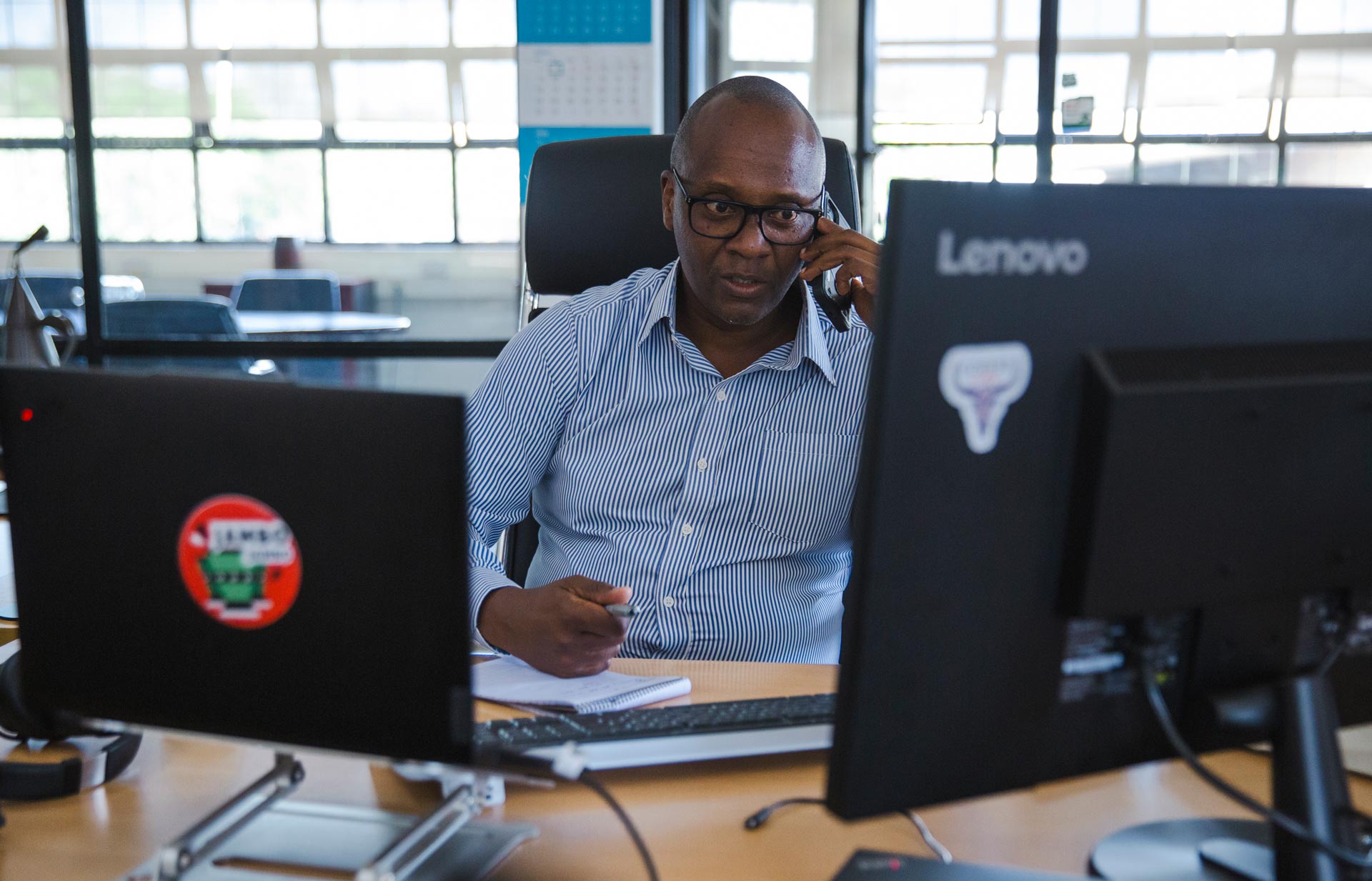
Daniel speaks with a customer, coordinating coffee selections, pricing, and logistics.
Photo by: Alice Oldenburg
A Trader’s Day: From Cupping to Client Visits
During the coffee season, Daniel’s days move quickly.
Most mornings begin in the cupping lab, tasting coffees, evaluating new lots, and preparing samples for clients visiting the region. Cupping is central to everything he does. It confirms quality, reveals hidden defects, and helps determine the right price for each lot. It also helps match coffees with the markets where they will resonate most. “Different markets look for different flavor profiles,” Daniel explains.
A Scandinavian roaster might look for bright blackcurrant acidity. An Asian buyer might prefer a winey fruit-forward profile. Part of Daniel’s role is identifying where each coffee will resonate most.
When evaluating a new lot, he considers several factors:
- Origin and region
- Farm, cooperative, or estate
- Altitude
- Coffee variety
- Processing method
- Crop year and harvest date
- Moisture levels and water activity
Coffees scoring above 87 points on the Specialty Coffee Association scale often attract strong interest from specialty buyers looking for distinctive and high-quality lots. But the final question is always the same. Where will this coffee find its home?
Working Across East Africa
Daniel’s work spans three coffee-producing countries: Kenya, Uganda, and Tanzania.
While these regions all produce high-quality coffees grown at high elevations, each origin offers distinct characteristics shaped by climate, soil, and good agricultural practices.
Weather patterns, varieties, and farming methods all influence the final cup profile.
Despite these differences, the supply chain structure across the region is often similar. Smallholder farmers, many managing less than three acres, form the backbone of production and deliver their harvests to cooperative washing stations.
These systems create both opportunities and challenges.
Many farmers face issues such as ageing trees, low yields, and limited access to agronomy services. Climate change and rising production costs add further pressure to the sector. For traders like Daniel, being based at origin is essential.
“Being here means having direct access to real-time information,” he says. “Weather impacts, harvest progress, and processing conditions all affect the coffee and the expectations of buyers.”
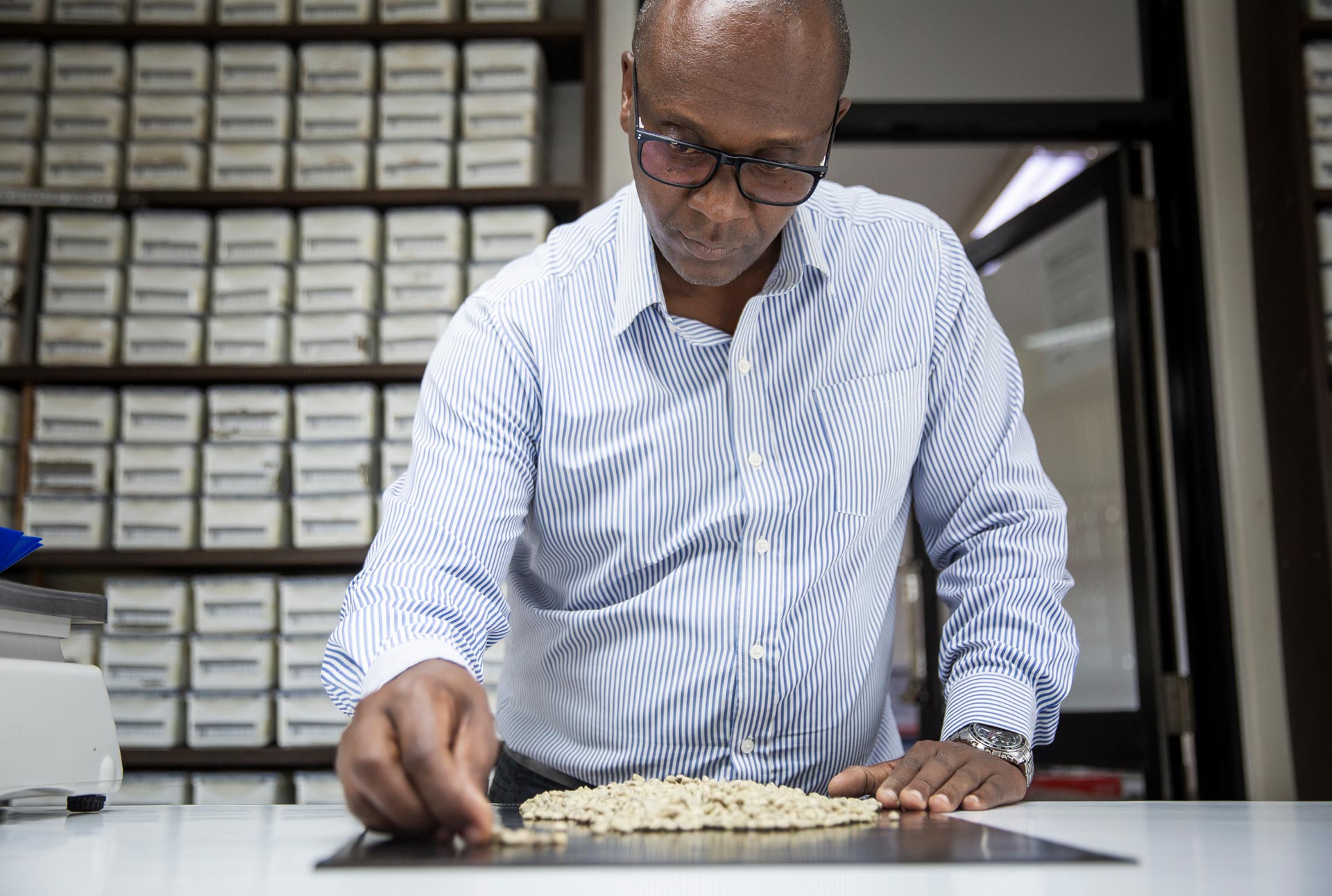
Daniel reviewing a sample of green coffee, removing defective beans to safeguard quality.
Photo by: Alice Oldenburg
Translating Origin for Buyers
Part of Daniel’s role is storytelling.
When he introduces a coffee to a roaster, he does not simply present a sample. He shares the journey behind it.
That may include the story of the cooperative that produced the coffee, the agronomy projects supporting farmers, or the environmental conditions that shaped the flavor profile.
Sometimes the story is about opportunity. Other times it is about challenge, such as explaining how unusual weather patterns may influence the upcoming harvest.
These insights help buyers understand what is happening at origin and prepare them for what to expect.
Transparency and traceability play an important role in these relationships. They build trust across the supply chain and allow buyers to understand where their coffee comes from, from farm practices and processing methods to the cooperative behind the lot.
They also support compliance with evolving industry standards and regulations.
Demand in the specialty coffee market is also evolving. Younger coffee consumers are increasingly drawn to unique flavor profiles, experimental processing methods, and brewing styles such as cold brew. These trends continue to shape what buyers look for when sourcing coffees from East Africa.
Why East African Coffee Stands Out
For specialty coffee buyers, East Africa holds a special place.
The region’s combination of high elevation, volcanic soils, and unique microclimates produces flavor profiles that are difficult to replicate anywhere else. That uniqueness is part of what keeps buyers coming back.
But for Daniel, what makes the region truly special goes beyond the cup. It is the people.
From farmers carefully harvesting cherries to cooperative managers overseeing processing, thousands of individuals contribute to every lot of coffee that leaves the region. Daniel sees his role as connecting these efforts with customers around the world.
At the end of the day, that connection is what motivates him.
“The love for my job,” he says simply, “and ensuring satisfaction from coffee growers all the way to the end consumer.”
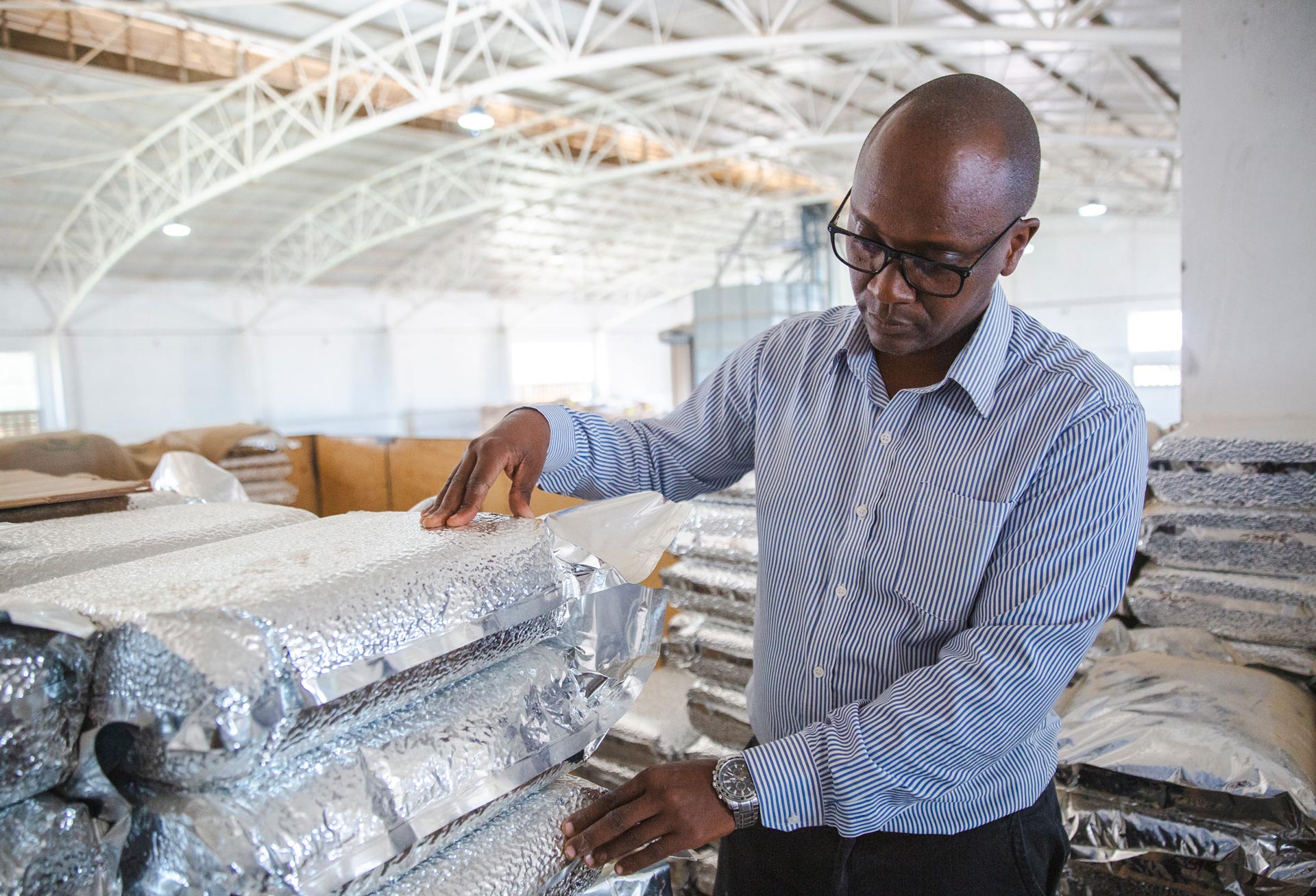
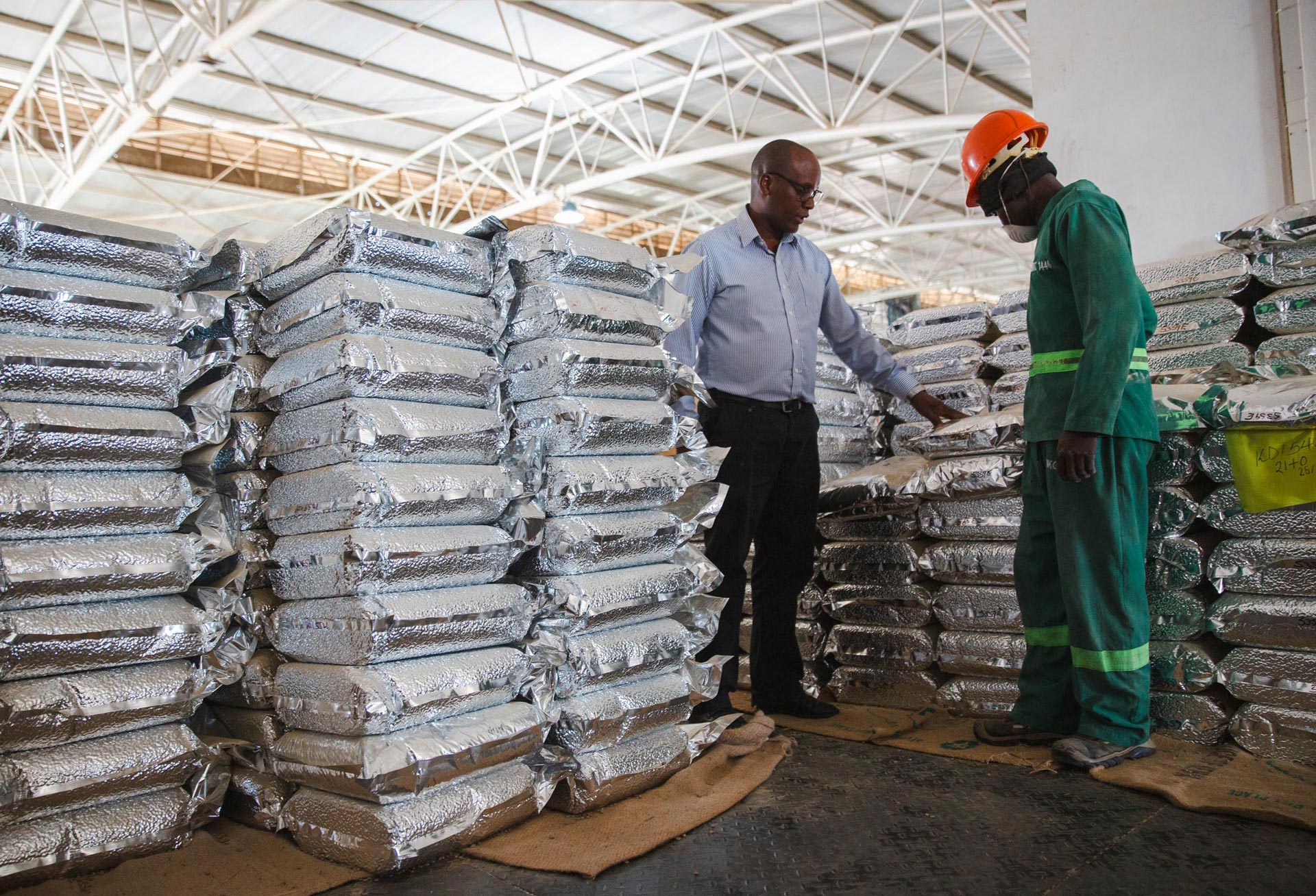
Daniel at the warehouse, ensuring coffees are correctly packed in airtight aluminium packaging to preserve quality during export.
Photos by: Alice Oldenburg
